9/20
I think the blue trunked guy is gonna kick the red trunk guy's ass, Lisa says to me as we watch the twelve-year olds battle things out. And to think she we paid $20 each to see this. And to think we actually like it. Lisa's prediction does come true as the blue trunked kid lands a roundhouse to the right temple. The other guy gets carried out on a stretcher.
This is the sport of Muay Thai boxing. It seems to be Thailand's national sport. We decide to take in a fight to get some true thai culture. We take our second class seats as we follow the "Foreigners" sign upward. We sit on the concrete bleachers with Tiger beer and roasted peanuts no more than 20 yards from the ring.
It seems to me that it is an honor to be a Thai boxer. They are given offerings of flowers. They get to wear head pieces which look like elongated Christmas wreaths. Not to mention the flowery upright horn in the back. They are the center of attention in the ring as the Thai National Anthem starts. Before the match begins, each of the boxers will do a ritual folk dance as the band begins to play alongside. One fighter strikes up a gallop, while another strides across the ring like he is Michael Jackson in his golden years. Two drummers, a bell player and a woodwind player strike up a tune that crosses middle eastern music with Kenny G. Both fighters pray to their God of choice as the opening bell opens.
There are ten fights tonight. Each fight can go a maximum of five rounds. Three minutes each round, two minutes between the rounds. Unless there is a knockout, in which case the stretchers come out as described above.
Among all of this, a pack of locals in the stands next to us begin to murmur to each other, flashing their hands back and forth. One of the boxers lands a side kick to the stomach and these locals erupt in cheer. More hands and fingers beginning to flash back and forth. A few people at the bottom of the bleachers have a pen and notepad in hand. Reminiscent of the New York Stock Exchange, bets from all sides seem to be pouring in. Somehow the system emerges within the chaos.
To add to the fun, there is a Cheech Marin Look-a-like who is a coach for some of the fighters. He shakes his arms wildly with his dilated eyes and stained blue shirt. He begins to yell and scream profusely at his boxers.
With all of the fanfare, it's hard to concentrate on the fight, itself. We focus our attention back to the main event for a bit. We watch seven fights in total before jet lag kicks in. Three hours of Muay Thai boxing is enough for a lifetime. We walk through the iron gate out the doors, hop in a tuk-tuk and sleep off the festivities.
---------------------
This was the first time I've ever seen the Thai people violent or emotional. Usually it is the land of smiles. A Wat-dee krap, hello to you too sir. Even the 7-11 workers across the street are happy to see you in the morning.
So Thailand has served as a nice resting point as our trip officially begins. The other biggest accomplishment of the 48 hours in this city is viewing the Grand Palace, where the Royal Monastary and the Emerald Buddha Bust resides. We learn that the Thais dress up Buddha bust according to the seasons. The summer Buddha is scantily clad with almost nothing on. The rainy buddha has a big diagonal god stripe across his chest. And the winter Buddha has a light preforated gold blanket to get him through those cold 75 degree nights. It's not a bad life for the Buddha in this part of the world. He gets offerings of fruits, nuts, cheeses, lotus flowers, eggs. The Buddha eats better than I do, for sure.
The other highlights of the Grand Palace are the Golden Garudas (half man-half bird mythical creatures) throughout the place. He has this amazing hand over head posture move that I can't replicate even in my most precarious of states. It is also noted that the Thai Rama IX, the ruler of Thailand, has some amazing rooms throughout the palace. He conducts his state ceremonies in the Grand palace as well as the Coronation Ceremony every December 5, which basically is a day where all the people tell him how great he is in public. And word on the street is that he truly is a great man who has helped make a good life for his people.
Tomorrow we fly to Cambodia, our first stop being the town of Siem Reap, the home of Angkor Wat. But that's another story for another journal entry.
-Travelling Sherman
Sunday, September 23, 2007

Monday, September 17, 2007
The Second Half

Tonight, Travelling Sherman begins again.
I am struggling to put pen to paper at this very moment. Everything seems a bit blurry. I faintly remember doing this roughly nine months ago. Things were a bit different then. There was so much anticipation, so much excitement, and so much wonder.
So we had landed from Hong Kong just in time the New Year, our trip shortened, ourselves confused. Our home of mesh bags and clothespins had been dragged from underneath our feet.
We woke up to fog over the next few days back in San Francisco. The weather was our metaphor. Jet lag set in. 3 AM seemed like the perfect time to go to the grocery store.
The months passed. We visited Lisa's family quite a bit. We helped her Dad back to better health. It seemed like that would be our job for the short while: to take care of our family.
And so I thought I would take care of things and marry Lisa. I'm glad she said yes right away. A beautiful wedding happened in April, followed by two beautiful parties throughout the spring and summer.
We were married and happy and it was August. It was still foggy, but a bit warmer here in San Francisco. The idea came up to go back out to Asia and to finish our trip. It seemed like the best idea we had all day.
So another trip to the travel agent, four trips to REI, and two lonely planet books later, we sit here again in San Francisco, ready to jump back into our Van Winkle like dream that seems so foreign to us now.
-----------------------------------
So we go by air back to Thailand, and head eastbound to Cambodia shortly after to reach the temples of Angkor. The idea is to spend time in Cambodia, Vietnam, Laos and back into Thailand.

But who knows what will happen.
Keep your trusty browser on this web page to find out.
-Travelling Sherman
Saturday, January 13, 2007
Life in the Middle Seat
12/29
It's almost the new year, and you would definitely know it by the crowdedness of this flight. Lisa and I are on our way home to San Francisco. An auspicious place in an auspicious time - San Francisco two days before the new year. Lisa and I are going home early to attend to her father's health. We both decided it was the right thing to do. As Tikka, the Nepali guide said to me once, "Life is important". I don't think I could have said it better, myself.
Since we had open-ended return tickets, we were able to book a flight for today. Since beggars cannot be choosers, Lisa and I take separate seats. We are in separate rows along the middle aisle in the middle seat, the most coveted seat on an airplane if you are a sardine.
The middle seat should serve as the appropriate seat, as I feel like I have lived life in the middle seat for some time now. Between jobs and between livelihoods, this trip has served as some sort of passageway from one phase of my life to the next. Maybe I'm laying the metaphor on a bit thick, but the more I think about it, the more it makes sense. I've been asked by some about whether or not I will return to Asia. Most definitely. As for when,I reply 'when the time is right'. At this point, I'm not exactly sure what I mean by that, but something tells me that I'll know when the time will come to return.
So now comes the age old questions: What country did you like the best? What have you learned? How has your life changed? I feel like I'm answering the essay for a college entrance application. It would be easy to come up with short, canned, terse answers to the above questions. I would be lying to myself if I took this approach. Instead, I can share with you only my raw thoughts of the moment.
Thoughts on Asia
1. I have seen extreme poverty and realize that everyone in the western world is amazing wealthy compared to the majority of Asia.
2. I wish I could say that I loved all of the people from all of the places we visited. Unfortunately, that is not the case. I still hold prejudices and still become quite uncomfortable when I'm completely out of my element. I've also learned to accept this, deal with it, and focus on positive thoughts.
3. I've learned that the best meal you can have is the food from that country. Accept no substitutes.
4. I've learned that Lisa and I can get through any situation together and laugh about it later.
I am resisting the need to summarize the entire trip, especially since I don't consider this to be the end of the trip. I always hate endings, anyways. Take the movies, for example. The movie ends, and you have to get out of your seat only to walk over spilled popcorn and soda cans. You could say this trip was like a trip to the movies. I would say it was more like watching the first two Lord of the Rings movies. It's been a great start, but you know there's more to the story. So I guess I'm finished for now, then. I'll settle down for a bit in San Francisco. I'll attend to my practical matters. I'll settle down with Lisa, my true companion. I'll catch up with family and old friends. I'll pay my taxes, and I'll try to look out for the spilled popcorn and the soda cans on the way out.
Thank you for all of your support and emails. And remember to keep travelling, wherever you are.
--Travelling Sherman
It's almost the new year, and you would definitely know it by the crowdedness of this flight. Lisa and I are on our way home to San Francisco. An auspicious place in an auspicious time - San Francisco two days before the new year. Lisa and I are going home early to attend to her father's health. We both decided it was the right thing to do. As Tikka, the Nepali guide said to me once, "Life is important". I don't think I could have said it better, myself.
Since we had open-ended return tickets, we were able to book a flight for today. Since beggars cannot be choosers, Lisa and I take separate seats. We are in separate rows along the middle aisle in the middle seat, the most coveted seat on an airplane if you are a sardine.
The middle seat should serve as the appropriate seat, as I feel like I have lived life in the middle seat for some time now. Between jobs and between livelihoods, this trip has served as some sort of passageway from one phase of my life to the next. Maybe I'm laying the metaphor on a bit thick, but the more I think about it, the more it makes sense. I've been asked by some about whether or not I will return to Asia. Most definitely. As for when,I reply 'when the time is right'. At this point, I'm not exactly sure what I mean by that, but something tells me that I'll know when the time will come to return.
So now comes the age old questions: What country did you like the best? What have you learned? How has your life changed? I feel like I'm answering the essay for a college entrance application. It would be easy to come up with short, canned, terse answers to the above questions. I would be lying to myself if I took this approach. Instead, I can share with you only my raw thoughts of the moment.
Thoughts on Asia
1. I have seen extreme poverty and realize that everyone in the western world is amazing wealthy compared to the majority of Asia.
2. I wish I could say that I loved all of the people from all of the places we visited. Unfortunately, that is not the case. I still hold prejudices and still become quite uncomfortable when I'm completely out of my element. I've also learned to accept this, deal with it, and focus on positive thoughts.
3. I've learned that the best meal you can have is the food from that country. Accept no substitutes.
4. I've learned that Lisa and I can get through any situation together and laugh about it later.
I am resisting the need to summarize the entire trip, especially since I don't consider this to be the end of the trip. I always hate endings, anyways. Take the movies, for example. The movie ends, and you have to get out of your seat only to walk over spilled popcorn and soda cans. You could say this trip was like a trip to the movies. I would say it was more like watching the first two Lord of the Rings movies. It's been a great start, but you know there's more to the story. So I guess I'm finished for now, then. I'll settle down for a bit in San Francisco. I'll attend to my practical matters. I'll settle down with Lisa, my true companion. I'll catch up with family and old friends. I'll pay my taxes, and I'll try to look out for the spilled popcorn and the soda cans on the way out.
Thank you for all of your support and emails. And remember to keep travelling, wherever you are.
--Travelling Sherman
Hong Kong
12/28
Lisa and I are standing next to the Bruce Lee statue at the Avenue of the Stars while the light show in Hong Kong harbor begins. Scores of buildings are lit up in sync with a soundtrack by computer. With every downbeat, a different building light flickers on or off in the distance. I rub my head and am befuddled with amazement. It is in the Guinness Book of World Records for most lights in a light show. Pink Floyd never stood a chance. I wonder how these people on the other side of the pacific became so much smarter than us.
Welcome to Hong Kong, the land of efficiency. As we take the Airport bus into the neighborhood of Kowloon, Lisa and I see row after row of apartments. With a population of almost 7 million people, building up is the desired architectural plan. Street signs in Chinese and in English line up throughout every street corner. You are more likely to get lost in Disneyland than here. Oh yes, I almost forgot - Hong Kong has one of those as well.
It is easy to stay in Hong Kong for days. There's countless different markets. There is a jade market that sells all varieties of jewelry, there are men's a women's markets, there are fruit markets, meat markets and the like. Bargainers from all over the world come here to negotiate prices on various items. While bargaining is nothing new for us, I begin to enjoy it more here in Hong Kong. It's more of a game, more friendly, and most importantly I can leave anytime and not have a fear of being stalked.
Hong Kong is known for its food, especially its tea. Lisa and I take the afternoon in Hong Kong Park and visit the Flagstaff House Museum of Tea Ware. The museum takes you on a journey of tea. Here's what I found out....
(begin tea stuff, skip if uninterested)
(End of tea stuff)
The time goes by way too fast and the day is almost done. Soon we will be flying home to the USA. I feel as if there is much more to see in this strange but beautiful city. From the top of Hong Kong island, the mixture of skyscrapers and island chains provide a sharp contrast. Hong Kong to us was a place to stay on the way home to America. However, Hong Kong is a destination in its own right. With clean metros, delicious noodle soups with strange body organs, and dim sum restaurants by the dozen, this place is one of my top destinations. Stop your whining, I say. Hong Kong isn't going anywhere, especially now that the Chinese own the place. I'll be back to this continent sooner or later after a healthy dose of reality.
Keep travelling, wherever you are...
Travelling Sherman
Lisa and I are standing next to the Bruce Lee statue at the Avenue of the Stars while the light show in Hong Kong harbor begins. Scores of buildings are lit up in sync with a soundtrack by computer. With every downbeat, a different building light flickers on or off in the distance. I rub my head and am befuddled with amazement. It is in the Guinness Book of World Records for most lights in a light show. Pink Floyd never stood a chance. I wonder how these people on the other side of the pacific became so much smarter than us.
Welcome to Hong Kong, the land of efficiency. As we take the Airport bus into the neighborhood of Kowloon, Lisa and I see row after row of apartments. With a population of almost 7 million people, building up is the desired architectural plan. Street signs in Chinese and in English line up throughout every street corner. You are more likely to get lost in Disneyland than here. Oh yes, I almost forgot - Hong Kong has one of those as well.
It is easy to stay in Hong Kong for days. There's countless different markets. There is a jade market that sells all varieties of jewelry, there are men's a women's markets, there are fruit markets, meat markets and the like. Bargainers from all over the world come here to negotiate prices on various items. While bargaining is nothing new for us, I begin to enjoy it more here in Hong Kong. It's more of a game, more friendly, and most importantly I can leave anytime and not have a fear of being stalked.
Hong Kong is known for its food, especially its tea. Lisa and I take the afternoon in Hong Kong Park and visit the Flagstaff House Museum of Tea Ware. The museum takes you on a journey of tea. Here's what I found out....
(begin tea stuff, skip if uninterested)
- People have been drinking this tea stuff for thousands of years. It all started with the Han Dynasty back in roughly 206 B.C. They boiled leaves together with some basic spices of spring onions, ginger, mint, dates, dogwood and orange peels.
- Chinese Tea drinking started in the south until the Tang Dynasty brought it national at around 700 A.D. The Tang Dynasty started the ideas of steeping and powdering tea.
- The Yuan Dynasty came out with cream tea in the 1200s. They used magnolia flowers along with salt and cream to make their concoction. They started the trend of using fragrant flowers , such as chamomile and chrysanthemum, like we do today.
- The Ming Dynasty perfected the tea steeping idea in the 1400s. They would wash their teapots and tea leaves and put the dirty water into a slop bowl. Afterwards, they would pour hot water over the tea leaves and wait. The longer the steeping, the more flavor the leaves would give to the tea.
- The Tibetans also have their own tea. They throw cheese and salt over their tea. The cold weather in the plateau must have made these people crazy enough to put cheese in their tea.
- The Qing Dynasty came in roughly 1700 and championed the idea of oolong tea. They also steeped their tea. The only difference is that they fill the teapots 3/4 of the way full of leaves. This becomes really popular in the eastern provinces of Chaozhau and Fujian.
- Even if you don't drink tea, it's nice to see how one beverage can be so ingrained with a society. Tea was the beverage for social occasions, for weddings and other religious ceremonies. So the next time Starbucks slops two teabags into your cup, stop for a minute and think about all of the sacrifices the Chinese made and be grateful.
(End of tea stuff)
The time goes by way too fast and the day is almost done. Soon we will be flying home to the USA. I feel as if there is much more to see in this strange but beautiful city. From the top of Hong Kong island, the mixture of skyscrapers and island chains provide a sharp contrast. Hong Kong to us was a place to stay on the way home to America. However, Hong Kong is a destination in its own right. With clean metros, delicious noodle soups with strange body organs, and dim sum restaurants by the dozen, this place is one of my top destinations. Stop your whining, I say. Hong Kong isn't going anywhere, especially now that the Chinese own the place. I'll be back to this continent sooner or later after a healthy dose of reality.
Keep travelling, wherever you are...
Travelling Sherman
Tuesday, January 09, 2007
Ko Samui (Thailand, Part 4)
12/27
After sitting down upon some rucksacks, we step off the boat for Ko Samui. Each island we have reached in Thailand has become slightly larger than the previous one. Lisa and I along with our friends Stephanie and Melissa step off the ship to find accomodation. The plan is to only stay one day. Melissa and Stephanie plan to go south to Phuket while Lisa and I plan to fly north to Hong Kong. There has been a change of plans to be explained later. Simply put, Ko Samui is simply a rest stop to our final destinations.
Within these 24 hours, we manage to see the Big Buddha housed within the Wat Phra Yai temple. After a short walk past the overpriced beach restaurants, Asian markets and souvenir shops, we reach the temple entrance. At the entrance, there is a flight of stairs leading up to the big golden Buddha himself.
To be honest, it feels good to be in a temple again. I had become accustomed to taking off my shoes, spinning prayer wheels, and looking at the Buddha statues and donation boxes. I walk up the flight of stairs to get a closer look. There sits my golden Buddha friend. He looks different here in Thailand than in Nepal or India. His face is long and has shed a few pounds. It is almost as he's gotten a face lift and a nip/tuck job on the way over here.
The only mildly appalling observation about this Buddha is that when the sun goes down, the locals turn on about 200 flashing incandescent light bulbs. I feel as the carnival just came to town.
As I go back downstairs, Lisa points out the donation area. At first, my skepticism runs high. On second look, I realize that a 20 Baht (roughly $.70) donation allows you to write a name of a loved one on a brick. This brick is then put in a pile and will later be used to build or rebuild parts of the temple. I guess if that Buddha cannot be inside of you, your name can at least inside his temple.
The four of us walk back, catch the red sunset and find a place for dinner. We learn that Thai people make great Pad Thai but bad pub food. At least the Vodka/Red Bull is on sale this evening.
We stay the night in a nice $15 per night place. The only drawback is that it is 500 ft. from the runway. Small sonic booms happen on the half hour, only to fade into the night as the last plane takes off shortly after 10 PM. Tomorrow we leave Thailand - the land of pleasure, and fake Christmas dinners. Until then, keep travelling - wherever you are.
Travelling Sherman
After sitting down upon some rucksacks, we step off the boat for Ko Samui. Each island we have reached in Thailand has become slightly larger than the previous one. Lisa and I along with our friends Stephanie and Melissa step off the ship to find accomodation. The plan is to only stay one day. Melissa and Stephanie plan to go south to Phuket while Lisa and I plan to fly north to Hong Kong. There has been a change of plans to be explained later. Simply put, Ko Samui is simply a rest stop to our final destinations.
Within these 24 hours, we manage to see the Big Buddha housed within the Wat Phra Yai temple. After a short walk past the overpriced beach restaurants, Asian markets and souvenir shops, we reach the temple entrance. At the entrance, there is a flight of stairs leading up to the big golden Buddha himself.
To be honest, it feels good to be in a temple again. I had become accustomed to taking off my shoes, spinning prayer wheels, and looking at the Buddha statues and donation boxes. I walk up the flight of stairs to get a closer look. There sits my golden Buddha friend. He looks different here in Thailand than in Nepal or India. His face is long and has shed a few pounds. It is almost as he's gotten a face lift and a nip/tuck job on the way over here.
The only mildly appalling observation about this Buddha is that when the sun goes down, the locals turn on about 200 flashing incandescent light bulbs. I feel as the carnival just came to town.
As I go back downstairs, Lisa points out the donation area. At first, my skepticism runs high. On second look, I realize that a 20 Baht (roughly $.70) donation allows you to write a name of a loved one on a brick. This brick is then put in a pile and will later be used to build or rebuild parts of the temple. I guess if that Buddha cannot be inside of you, your name can at least inside his temple.
The four of us walk back, catch the red sunset and find a place for dinner. We learn that Thai people make great Pad Thai but bad pub food. At least the Vodka/Red Bull is on sale this evening.
We stay the night in a nice $15 per night place. The only drawback is that it is 500 ft. from the runway. Small sonic booms happen on the half hour, only to fade into the night as the last plane takes off shortly after 10 PM. Tomorrow we leave Thailand - the land of pleasure, and fake Christmas dinners. Until then, keep travelling - wherever you are.
Travelling Sherman
Wednesday, January 03, 2007
Ko Phagnan (Thailand, part 3)
12/26
To be honest, I cannot recall the daily events since the last entry. I only recall faces, foods and sandy beaches. We have been joined on this leg of the journey by our friends Stephanie and Melissa. Both are teachers whom we worked with last year. They are still working as their trip to Thailand is a needed getaway of relaxation.
It was by chance we met them in Ko Tao, as Lisa and I were walking to breakfast. We saw Stephanie and Melissa in a travel office as Stephanie had her wallet taken on the morning boat ride. After all of the details were sorted out, we cruise the island like a gang of girls (plus myself) have become.
The tide is high as the typhoons of the Phillipines affect the weather ever so slightly. The beachlines in Ko Tao shrink by the day, as we are forced further back into the grass. We decide to take an excursion to a monkey reserve on the south shore. We see a handful of monkeys navigating tree branches and canopies using their limbs as easily as we change lanes in traffic. They seem effortless as well as human like in their movements. One monkey, in particular, stands out. Tito, the cheeky black monkey, was the troublemaker of the group. Tito likes to play tag and chase people around. Tito interrupts two other monkeys during their romantic dinner of bananas and peanuts and harasses the male. The chase is on. Tito looks to have the other monkey cornered when the other monkey jumps to the highest balcony. Tito grows tired and gives up, as he comes to us to perform some tricks.
-----
The following day we reach Ko Phagnan -- the middle sized island in the Gulf of Thailand archipelago. We were forced to take the express vomit cruiser. The Thai crew hands out barf bags before takeoff. About a half an hour into the ride, the first victim falls across from me. Soon thereafter, the child reaches for his bag and deposits his excess. Soon enough, about a dozen passengers join into the fray. Lisa holds her ears as I close my eyes. At least they could have other than the clear colored bags for me to view the evidence.
We stay at a place called the central cottage - an hour's drive on the other side of the island. We huddle into a pickup truck and drive over what could possibly be the poorest maintained roads in all of Thailand. It takes us one hour to go twelve miles, about the same pace as L.A. traffic. We go up and down and up again like popcorn kernels. As long as we don't pop we should be fine.
The cottage is located on the Thong Nai Pan Yai - the big beach of the area. After two days of clouds, the weather turns sunny as the tide recedes. We walk every day to the neighboring beach as it reminds me everything about beaches back home: warm water, nice beaches, good waves, and handsome sandwiches.
Indeed, we eat at a place called 'Handsome Sandwiches'. The Thais make sandwiches and burgers here made to order. One sandwich will put you in pure bliss for the rest of the afternoon. They have tuna sandwiches, burger sandwiches, ham and cheese sandwiches all on a sesame seed bun. I even purchase some T-Shirts to commemorate my journey to the Handsome Sandwiches shop.
The Thais push Christmas on the Tourists as jingle bells, Santa hats, fireworks and Christmas carols fill the holiday. One tradition they have is lighting a small fire within a kite lamp and launching it into the sky. It is a sight to see until the fire kite falls into the trees. My fearsome worries of the kites catching fire in the forest are put to rest as the last fire burns out. We spend the rest of the evening having dinner and swapping stories. While the girls are reminiscing about Christmas at home, the lone Jew could care less. I'm demanding some Dreidels and chocolate gelt for the next trip.
So here we are today, the day after Christmas. The waters are much more calm as I write. We are on our way to Ko Samui, the third of the Gulf of Thailand Islands. Another set of adventures await as you will hear about it first by me. Anchors away. Another island, another day.
-Travelling Sherman
To be honest, I cannot recall the daily events since the last entry. I only recall faces, foods and sandy beaches. We have been joined on this leg of the journey by our friends Stephanie and Melissa. Both are teachers whom we worked with last year. They are still working as their trip to Thailand is a needed getaway of relaxation.
It was by chance we met them in Ko Tao, as Lisa and I were walking to breakfast. We saw Stephanie and Melissa in a travel office as Stephanie had her wallet taken on the morning boat ride. After all of the details were sorted out, we cruise the island like a gang of girls (plus myself) have become.
The tide is high as the typhoons of the Phillipines affect the weather ever so slightly. The beachlines in Ko Tao shrink by the day, as we are forced further back into the grass. We decide to take an excursion to a monkey reserve on the south shore. We see a handful of monkeys navigating tree branches and canopies using their limbs as easily as we change lanes in traffic. They seem effortless as well as human like in their movements. One monkey, in particular, stands out. Tito, the cheeky black monkey, was the troublemaker of the group. Tito likes to play tag and chase people around. Tito interrupts two other monkeys during their romantic dinner of bananas and peanuts and harasses the male. The chase is on. Tito looks to have the other monkey cornered when the other monkey jumps to the highest balcony. Tito grows tired and gives up, as he comes to us to perform some tricks.
-----
The following day we reach Ko Phagnan -- the middle sized island in the Gulf of Thailand archipelago. We were forced to take the express vomit cruiser. The Thai crew hands out barf bags before takeoff. About a half an hour into the ride, the first victim falls across from me. Soon thereafter, the child reaches for his bag and deposits his excess. Soon enough, about a dozen passengers join into the fray. Lisa holds her ears as I close my eyes. At least they could have other than the clear colored bags for me to view the evidence.
We stay at a place called the central cottage - an hour's drive on the other side of the island. We huddle into a pickup truck and drive over what could possibly be the poorest maintained roads in all of Thailand. It takes us one hour to go twelve miles, about the same pace as L.A. traffic. We go up and down and up again like popcorn kernels. As long as we don't pop we should be fine.
The cottage is located on the Thong Nai Pan Yai - the big beach of the area. After two days of clouds, the weather turns sunny as the tide recedes. We walk every day to the neighboring beach as it reminds me everything about beaches back home: warm water, nice beaches, good waves, and handsome sandwiches.
Indeed, we eat at a place called 'Handsome Sandwiches'. The Thais make sandwiches and burgers here made to order. One sandwich will put you in pure bliss for the rest of the afternoon. They have tuna sandwiches, burger sandwiches, ham and cheese sandwiches all on a sesame seed bun. I even purchase some T-Shirts to commemorate my journey to the Handsome Sandwiches shop.
The Thais push Christmas on the Tourists as jingle bells, Santa hats, fireworks and Christmas carols fill the holiday. One tradition they have is lighting a small fire within a kite lamp and launching it into the sky. It is a sight to see until the fire kite falls into the trees. My fearsome worries of the kites catching fire in the forest are put to rest as the last fire burns out. We spend the rest of the evening having dinner and swapping stories. While the girls are reminiscing about Christmas at home, the lone Jew could care less. I'm demanding some Dreidels and chocolate gelt for the next trip.
So here we are today, the day after Christmas. The waters are much more calm as I write. We are on our way to Ko Samui, the third of the Gulf of Thailand Islands. Another set of adventures await as you will hear about it first by me. Anchors away. Another island, another day.
-Travelling Sherman
Thailand, Part 2
12/18
Almost a week has passed, and I am still sitting in the same chair in the same restaurant on the same island. Thailand does this to you. These people are quite smart. They have produced a chain of islands that make you never want to return to your home country. They provide good food at low prices, packs of bungalows every half mile, and more smiles than anywhere else on the planet. The island where Lisa and I are living on is Ko Tao. With 80 degree Fahrenheit water, amazing pad Thai noodles at $2/plate, and amazing rooms at $6/night, I see no reason to leave the island.
Even getting to the island is easy. We board the local bus that is Air conditioned, has reclining seats, and toilet paper as far as the eye can see. We happen to be the only westerners on the bus, as the "Lord of the Rings" movie is dubbed into Thai. It's quite funny to hear Gandalf say things like "Wat dee krap" and other broken Thai phrases. This guy must have really been some wizard.
The bus driver stops at the appropriate stop, helps us with our bags, and walks us to the Taxi station without even asking for anything. I am puzzled. The driver wants nothing other than for us to be happy. What a strange concept. I rub my head as I think about it.
We wait a few hours in Chumpon, the mainland port city. Lisa and I are taking the night boat to Ko Tao. After getting some dinner, we hop on the boat to find the accommodation of some dusty twin beds on the floor. We are accompanied by 60 other fellow passengers. People are coughing, farting and belching throughout the evening. The boat begins to rock as I try sleeping on my stomach. It's like a water bed without all the needless markup.
We arrive to the Ko Tao pier at about 5 in the morning. We arrive at the Seashell resort and wait for things to open. About two hours later, Koh, the attendant checks us in to the bungalow. Lisa and I fall asleep soundly to the waves and motor scooters. A Fifteen hour trip to paradise is worth it. Next time, I'll remember to bring the Dramamine....
-------------
Ko Tao is named the turtle island, as it is a haven for divers There are roughly 40 different diving schools to choose from. Our hotel had a deal where we basically get a free room for the hotel if we sign up for their diving school. We do an open water 4-day course and get certified in some of the warmest water on the planet. I feel as Lisa and I are back in school. We get our PADI (Professional Association of Diving Instructors) textbook. We have homework. We have to read three chapters and fill out the study guide. We finally get to paradise and I am taking notes. There is something wrong with this picture.
Our instructor, Fran is great. She is from England and has left her life to start a new one here as an underwater videographer. She helps Lisa and I through everything with ease. While all the regulators and vests seem intimidating at first, Fran makes it simple. It's only Lisa and I in the class. We practice sharing air, cleaning our masks and learning to be buoyant. By the last two days, we dive into open water and see trigger fish, yellow box fish, clownfish (Nemo) among many others. I feel like I'm in SpongeBob's world. Being underwater is like going to the aquarium, except they drop you inside of it instead. It's so peaceful that the 40 minutes you are down there seems like a nanosecond.
I imagine I'll grow tired of the beach, the fresh fish barbecues, the diving and the sun at some point. They even have thrown in some New Year's and Christmas decorations. If only I could find a menorah, it would feel like home.
So it's only right to say Happy Holidays. May the season bring love, joy, happiness and all of the other things that hallmark promises. By all means, take a vacation. I know I have taken my share. One of these days I should enter reality. On second thought, maybe not. So long for now from Thailand. The land of smiles. Keep smiling, wherever you are.
-Travelling Sherman
Almost a week has passed, and I am still sitting in the same chair in the same restaurant on the same island. Thailand does this to you. These people are quite smart. They have produced a chain of islands that make you never want to return to your home country. They provide good food at low prices, packs of bungalows every half mile, and more smiles than anywhere else on the planet. The island where Lisa and I are living on is Ko Tao. With 80 degree Fahrenheit water, amazing pad Thai noodles at $2/plate, and amazing rooms at $6/night, I see no reason to leave the island.
Even getting to the island is easy. We board the local bus that is Air conditioned, has reclining seats, and toilet paper as far as the eye can see. We happen to be the only westerners on the bus, as the "Lord of the Rings" movie is dubbed into Thai. It's quite funny to hear Gandalf say things like "Wat dee krap" and other broken Thai phrases. This guy must have really been some wizard.
The bus driver stops at the appropriate stop, helps us with our bags, and walks us to the Taxi station without even asking for anything. I am puzzled. The driver wants nothing other than for us to be happy. What a strange concept. I rub my head as I think about it.
We wait a few hours in Chumpon, the mainland port city. Lisa and I are taking the night boat to Ko Tao. After getting some dinner, we hop on the boat to find the accommodation of some dusty twin beds on the floor. We are accompanied by 60 other fellow passengers. People are coughing, farting and belching throughout the evening. The boat begins to rock as I try sleeping on my stomach. It's like a water bed without all the needless markup.
We arrive to the Ko Tao pier at about 5 in the morning. We arrive at the Seashell resort and wait for things to open. About two hours later, Koh, the attendant checks us in to the bungalow. Lisa and I fall asleep soundly to the waves and motor scooters. A Fifteen hour trip to paradise is worth it. Next time, I'll remember to bring the Dramamine....
-------------
Ko Tao is named the turtle island, as it is a haven for divers There are roughly 40 different diving schools to choose from. Our hotel had a deal where we basically get a free room for the hotel if we sign up for their diving school. We do an open water 4-day course and get certified in some of the warmest water on the planet. I feel as Lisa and I are back in school. We get our PADI (Professional Association of Diving Instructors) textbook. We have homework. We have to read three chapters and fill out the study guide. We finally get to paradise and I am taking notes. There is something wrong with this picture.
Our instructor, Fran is great. She is from England and has left her life to start a new one here as an underwater videographer. She helps Lisa and I through everything with ease. While all the regulators and vests seem intimidating at first, Fran makes it simple. It's only Lisa and I in the class. We practice sharing air, cleaning our masks and learning to be buoyant. By the last two days, we dive into open water and see trigger fish, yellow box fish, clownfish (Nemo) among many others. I feel like I'm in SpongeBob's world. Being underwater is like going to the aquarium, except they drop you inside of it instead. It's so peaceful that the 40 minutes you are down there seems like a nanosecond.
I imagine I'll grow tired of the beach, the fresh fish barbecues, the diving and the sun at some point. They even have thrown in some New Year's and Christmas decorations. If only I could find a menorah, it would feel like home.
So it's only right to say Happy Holidays. May the season bring love, joy, happiness and all of the other things that hallmark promises. By all means, take a vacation. I know I have taken my share. One of these days I should enter reality. On second thought, maybe not. So long for now from Thailand. The land of smiles. Keep smiling, wherever you are.
-Travelling Sherman
Thailand, part 1
12/11/06, 11:30 A.M. Local time
What a difference a day makes.
We begin the morning being racially profiled. As we queue up to board the Air India flight to Bangkok, we walk up to the attendant gate where an Indian Military agent stands. After he allows the preceding dozen passengers pass without any hesitation, the agent stops us with his hand with a resounding "No!". When asked why, he simply states "Bag Tag!" Supposedly, not having an Air India bag tag on our carry-on luggage is a threat to their national security. He marches us back through the airport as we are on a wild goose chase to find these bag tags. Meanwhile, countless more Indian nationals board the flight with no bag tags on their carry-ons. Goodbye from India, don't let the door hit you on the way out.
After getting frisked and hassled in the early morning, the arrival into Thailand is a breath of fresh air. From the minute we land into Bangkok and walk off the plane, I begin to appreciate the marvels of a modern city. There are clean toilets, food courts, and beautiful smiling women.
Thailand is a country where pleasure is top priority. Even disagreements or stressful situations are accompanied by smiles. In Asian culture, I'm told it is impolite to express anger. That is why I see so many Thai people laughing so much. They're laughing away any lingering frustrations in their body.
We take the metered taxi into the Banglampu district of Bangkok. This, being the tourist district, has all the creature comforts of home. There is modern music, food of all types, pharmacies that sell dental floss, and central air.
The main road of this district is Ko San Road. When walking down this road, I begin to see more white people than Thai people. I'll gladly take this night of relaxation after enduring a 3 hour night's sleep in Delhi accompanied by horn honking and lizards. Tomorrow, we are going to the island of Ko Tao by a combination of bus and boat. After that, our future is unknown for a while. I think it will involve white sand, ocean water, a beverage and a hammock. Here is to the future. I'll see you in a few days to tell you about it.
-Travelling Sherman
What a difference a day makes.
We begin the morning being racially profiled. As we queue up to board the Air India flight to Bangkok, we walk up to the attendant gate where an Indian Military agent stands. After he allows the preceding dozen passengers pass without any hesitation, the agent stops us with his hand with a resounding "No!". When asked why, he simply states "Bag Tag!" Supposedly, not having an Air India bag tag on our carry-on luggage is a threat to their national security. He marches us back through the airport as we are on a wild goose chase to find these bag tags. Meanwhile, countless more Indian nationals board the flight with no bag tags on their carry-ons. Goodbye from India, don't let the door hit you on the way out.
After getting frisked and hassled in the early morning, the arrival into Thailand is a breath of fresh air. From the minute we land into Bangkok and walk off the plane, I begin to appreciate the marvels of a modern city. There are clean toilets, food courts, and beautiful smiling women.
Thailand is a country where pleasure is top priority. Even disagreements or stressful situations are accompanied by smiles. In Asian culture, I'm told it is impolite to express anger. That is why I see so many Thai people laughing so much. They're laughing away any lingering frustrations in their body.
We take the metered taxi into the Banglampu district of Bangkok. This, being the tourist district, has all the creature comforts of home. There is modern music, food of all types, pharmacies that sell dental floss, and central air.
The main road of this district is Ko San Road. When walking down this road, I begin to see more white people than Thai people. I'll gladly take this night of relaxation after enduring a 3 hour night's sleep in Delhi accompanied by horn honking and lizards. Tomorrow, we are going to the island of Ko Tao by a combination of bus and boat. After that, our future is unknown for a while. I think it will involve white sand, ocean water, a beverage and a hammock. Here is to the future. I'll see you in a few days to tell you about it.
-Travelling Sherman
Friday, December 29, 2006
The age of rats
Somewhere around 12/7 on the way to Bikaner....
We get up at 8:30 AM to drive over 300 kilometers to Bikaner. Mr. Singh has made me a Punjab mix tape. Each song title takes up about 3 lines. Here's a couple of ideas as to what the songs are like. If you visit this site in the future, I hope to put some links to the music here.
Track 1: Sajem Meray Rangalay Jai Totay Mehlan
Description: A tabla E flat minor trance rhythm. It gives off a surreal, mystical feeling as it hits you most in the early morning hours.
Track 2: Kahan Gahay Baba Boleteytey
Description: A B flat minor down tempo song, with more melodic singing.
There are more songs like this, but you get the idea. The music matches the scenery. Deep guttural voices match the looks of desperation many of the surrounding townspeople have on their faces. Simply put, they are just happy to be alive. They don't need soap dispensers or bagel slicers. Give them a few pieces of wood and some chana masala and they are happy.
I also receive a great mix tape of a Pakistani Classical Musician named Hans Raj Hans. The album Mr. Singh gives to me is called Aaja Ve Mahdi. It is some of the most beautiful music I've ever heard. If you have iTunes, you can look him up at this address:
http://phobos.apple.com/WebObjects/MZStore.woa/wa/viewAlbum?id=110951353&s=143441
-------------
Bikaner and the Rats
So there's one major reason one goes to Bikaner and that is to see the Rat temple. The Rat temple is beholden as one of the most sacred temples in all of India. When we reach there, we see gray rats scurrying along the exposed stone temple floor. Having no shoes on adds another degree of adventure as we try and sidestep the rat dung. And yet, it is considered good luck to have these rats walk over your foot. It's especially good luck to see the big white rat. For the moment, I shake my head and wonder why.
For every strange Indian tradition, there is even a stranger mythical story. This one is no different, so here goes.
Travelling Sherman's Summary of Why the Rat Temple is Such a Big Deal
The last days of India....12/8 - 12/10
To be honest, the last days of India reminded me of a hangover. You rub your eyes, you collect your belongings, and you make arrangements to go back home. We arrive in Delhi on 12/9 into a hotel that the 'company' provided for us. All I have to say is that these hotel workers were so awful, it becomes comical. For example, a hotel worker asks us if we would like a cup of tea while were waiting for our room to be ready. After we agree, the worker comes with the tea and charges us $3 US. Most people in India give tea out to their enemies.
After going to a hotel of our choosing, we have a somewhat relaxing day in India, as possible as that may be. We go to Cannaught Place - the upscale section of Delhi to get some new clothes.
Mr. Singh takes us to the Delhi airport on our last morning - 12/10. It has now been almost a month in India. I can honestly say that India is the toughest country that I have traveled in during my short life. The laws do not make sense, the touts seem to be at every turn and have one hand in your wallet and one mouth in your ear. But if you can get past it, you realize that India is mysteriously beautiful. I try to remember the Indians like Mr. Singh: Kind, honest and warm. We leave India emotionally drained. We will fly to Thailand for a recovery session yet to be determined. But that is another blog for another time. The further the India trip becomes a memory, the stronger the memory lasts. It has been an unforgettable trip that has made me a better person.
Keep travelling, wherever you are.
-Travelling Sherman
We get up at 8:30 AM to drive over 300 kilometers to Bikaner. Mr. Singh has made me a Punjab mix tape. Each song title takes up about 3 lines. Here's a couple of ideas as to what the songs are like. If you visit this site in the future, I hope to put some links to the music here.
Track 1: Sajem Meray Rangalay Jai Totay Mehlan
Description: A tabla E flat minor trance rhythm. It gives off a surreal, mystical feeling as it hits you most in the early morning hours.
Track 2: Kahan Gahay Baba Boleteytey
Description: A B flat minor down tempo song, with more melodic singing.
There are more songs like this, but you get the idea. The music matches the scenery. Deep guttural voices match the looks of desperation many of the surrounding townspeople have on their faces. Simply put, they are just happy to be alive. They don't need soap dispensers or bagel slicers. Give them a few pieces of wood and some chana masala and they are happy.
I also receive a great mix tape of a Pakistani Classical Musician named Hans Raj Hans. The album Mr. Singh gives to me is called Aaja Ve Mahdi. It is some of the most beautiful music I've ever heard. If you have iTunes, you can look him up at this address:
http://phobos.apple.com/WebObjects/MZStore.woa/wa/viewAlbum?id=110951353&s=143441
-------------
Bikaner and the Rats
So there's one major reason one goes to Bikaner and that is to see the Rat temple. The Rat temple is beholden as one of the most sacred temples in all of India. When we reach there, we see gray rats scurrying along the exposed stone temple floor. Having no shoes on adds another degree of adventure as we try and sidestep the rat dung. And yet, it is considered good luck to have these rats walk over your foot. It's especially good luck to see the big white rat. For the moment, I shake my head and wonder why.
For every strange Indian tradition, there is even a stranger mythical story. This one is no different, so here goes.
Travelling Sherman's Summary of Why the Rat Temple is Such a Big Deal
- It all starts with a real person named Karni Mata (Mamma Karni). She is believed to be an incarnation of the Durga God (see Oh My God).
- Karni had mad superpowers. Karni supposedly could bring people back from the dead. She could turn the water pure, she could help kings win battles, and she can feed people for days based on dirt and grass. Basically, Jesus, Allah, and Moses gave no competition to Mamma Karni.
- So Karni Mata had one son and one sister. The sister wants to take the son to a holy temple down the road to spice things up.
- The Karni Mata says o.k. to her sister, but warns not to dip the son into their holy tank they have over there. They have some disclaimer stating that dipping can be harmful to your health including death.
- The sister takes the son, ignores the orders and dips the son into the holy tank. The son drowns. The sister is crying.
- The sister goes back to Karni Mata to bring the son back to life since she heard Karni has superpowers. Karni says sorry, no way. The sister cries some more.
- Karni gives a compromise. She says to her sister there is a way to bring the son back. The sister asks how, to which Karni replies 'the only way my son will come back is as a rat'.
- So Karni does her magic and her son comes back as the one white rat at the Rat temple.
- It is believed by the locals that when elders die, they also come back as rats. So essentially, you can see great-gramma gertrude running around the rat temple once a week. The locals claim this the '8th wonder' of the world. I just wonder who does the janitor duty.
The last days of India....12/8 - 12/10
To be honest, the last days of India reminded me of a hangover. You rub your eyes, you collect your belongings, and you make arrangements to go back home. We arrive in Delhi on 12/9 into a hotel that the 'company' provided for us. All I have to say is that these hotel workers were so awful, it becomes comical. For example, a hotel worker asks us if we would like a cup of tea while were waiting for our room to be ready. After we agree, the worker comes with the tea and charges us $3 US. Most people in India give tea out to their enemies.
After going to a hotel of our choosing, we have a somewhat relaxing day in India, as possible as that may be. We go to Cannaught Place - the upscale section of Delhi to get some new clothes.
Mr. Singh takes us to the Delhi airport on our last morning - 12/10. It has now been almost a month in India. I can honestly say that India is the toughest country that I have traveled in during my short life. The laws do not make sense, the touts seem to be at every turn and have one hand in your wallet and one mouth in your ear. But if you can get past it, you realize that India is mysteriously beautiful. I try to remember the Indians like Mr. Singh: Kind, honest and warm. We leave India emotionally drained. We will fly to Thailand for a recovery session yet to be determined. But that is another blog for another time. The further the India trip becomes a memory, the stronger the memory lasts. It has been an unforgettable trip that has made me a better person.
Keep travelling, wherever you are.
-Travelling Sherman
Jaisalmer and Khudi
12/4 - Jaisalmer
We pull into the Golden Sand City of Jaisalmer in the late afternoon. The rain has started to come down ever so steadily. We check into a hotel on the outskirts that reminds me of the Bates Hotel. Everything is in working order, but it seems like no fixtures have been replaced in the last fifty years. After taking an early dinner at a 'lonely planet recommended' establishment, we go straight to bed - praying that the bedbugs stay away for the evening.
12/5
So Mr. Singh has set up a tour from the 'company' today. The gentleman that will be giving the tour has a moustache that is an inch too big on either side. He joins us in the car as he sits in the front. After Mr. Singh drives us to the starting point - The Jaisalamer Fort - he drops us off for the morning tour with our 'company friend'.
For a lack of memorization skills, we can call this tour guide 'company friend', even though we have no idea if this tour guide works for the company and we know for sure that he's not our friend. The company friend guides us along through this fort - the oldest living fort as 4,000 Indians still live inside.
The company friend tells us that of the 4000 people, half are the Brahman (priest) class while the other half are the Rajput (warrior) class. The company friend is full of pride when he tells us that he is Brahman. He claims the he eats only vegetables and that he is clean, right before he hacks a big spitball into the ground.
Red handprints can be seen all throughout the fort. We are told the story....
We are finally taken to a Haveli. Havelis were inspired by the Mewari clans of the 19th century, as they had an Islamic architectural feel. The Patwa Haveli is one example. This Haveli, the one we are shown, was split later in the 19th century by 5 brothers who ran a merchant house selling ivory, silver and the like. The problem is that merchants, like many businessmen, were not satisfied with making some money. These merchants headed for the desert plains of the Pakistani border for the silk trade as Indira Ghandi takes it over in the 20th century. From this day forward the Patwa Haveli has been preserved as a national landmark.
The rest of the Jaisalmer tour turns lackluster, as we get shown various other emporiums where people try to guilt us into buying cash meres, shawls and other textiles. Between my years of training with Jewish guilt as well as my recent training with Indian con-artists, Lisa and I grow both bored and tired of the charade. We meet back with Mr. Singh and bid our 'company friend' farewell. May this strange man figure out his way in this more incredibly strange country.
------------------
Khudi
Mr. Singh is back in the driver's seat as we head down the dusty road to Khudi, about 1 hour south of Jaisalmer. Khudi is famous for its camels and camel rides, as this becomes the program for the day.
At about 30 miles from Pakistan, it begins to feel like the Arabian Peninsula. Desert sand dunes as far as the eye can see along with sporadic cacti and other desert flowers shape the horizon. Today, we are a small group of three: myself, Lisa and a younger British woman.
I realize why I will never enter an equestrian tournament. Riding horses, camels and ponies are more suited for the female body.
Lisa and I begin to realize that our camels have taken on our personalities. Her camel is moody and doesn't want to walk anywhere in the dry heat, my camel is a little spastic and poops every 15 minutes.
We finally begin to get the hang of riding a camel. We increase the speed as we make our way from various villages to what we call a sunset point. Later we find out that many camel rides all converge on this point, making it the perfect hippie gathering.
My camel is named Disco. He is short, but feisty. He gets mad is the teenage guides use him for a gym vault. I would not feel bad at all if Disco took a big poop on our guide at this moment.
-------------
The dinner is good that night. Lisa turns to bed early inside the non-heated bungalow hut. Mr. Singh then proceeds to beat me multiple times in Gin-Rummy. I'm going to get that card shark when he least expects it.
The bungalow huts prove to be worse than a night of camping in Nepal. It gets into the 30's Fahrenheit. Lisa and I have sent our sleeping bags home. The covers, being thin and narrow cover the most important organs of my body. The toilets are overflowed. I'm itching for morning.
But then, this is what India is all about - the highs and lows. I must admit, I'm in one of the most remote places on earth. I'll shiver a bit tonight for the experiences over the last week. I put on my beanie cap - my protective cap against the evil cold. I start to slumber. Good night for now.
Travelling Sherman
We pull into the Golden Sand City of Jaisalmer in the late afternoon. The rain has started to come down ever so steadily. We check into a hotel on the outskirts that reminds me of the Bates Hotel. Everything is in working order, but it seems like no fixtures have been replaced in the last fifty years. After taking an early dinner at a 'lonely planet recommended' establishment, we go straight to bed - praying that the bedbugs stay away for the evening.
12/5
So Mr. Singh has set up a tour from the 'company' today. The gentleman that will be giving the tour has a moustache that is an inch too big on either side. He joins us in the car as he sits in the front. After Mr. Singh drives us to the starting point - The Jaisalamer Fort - he drops us off for the morning tour with our 'company friend'.
For a lack of memorization skills, we can call this tour guide 'company friend', even though we have no idea if this tour guide works for the company and we know for sure that he's not our friend. The company friend guides us along through this fort - the oldest living fort as 4,000 Indians still live inside.
The company friend tells us that of the 4000 people, half are the Brahman (priest) class while the other half are the Rajput (warrior) class. The company friend is full of pride when he tells us that he is Brahman. He claims the he eats only vegetables and that he is clean, right before he hacks a big spitball into the ground.
Red handprints can be seen all throughout the fort. We are told the story....
- The men of the family would go out to battle. Many of them would die and never come back.
- The first thing the victors of an opposing army would do after slaying their dead is to come for the women. The women of the fallen sacrificed themselves in order to not allow this to happen.
- The women would cut their hands and make red handprints upon the door, and then bury themselves in a funeral pyre.
- When future nobility came to rule Jaisalamer, they began to see these handprints as good luck.
We are finally taken to a Haveli. Havelis were inspired by the Mewari clans of the 19th century, as they had an Islamic architectural feel. The Patwa Haveli is one example. This Haveli, the one we are shown, was split later in the 19th century by 5 brothers who ran a merchant house selling ivory, silver and the like. The problem is that merchants, like many businessmen, were not satisfied with making some money. These merchants headed for the desert plains of the Pakistani border for the silk trade as Indira Ghandi takes it over in the 20th century. From this day forward the Patwa Haveli has been preserved as a national landmark.
The rest of the Jaisalmer tour turns lackluster, as we get shown various other emporiums where people try to guilt us into buying cash meres, shawls and other textiles. Between my years of training with Jewish guilt as well as my recent training with Indian con-artists, Lisa and I grow both bored and tired of the charade. We meet back with Mr. Singh and bid our 'company friend' farewell. May this strange man figure out his way in this more incredibly strange country.
------------------
Khudi
Mr. Singh is back in the driver's seat as we head down the dusty road to Khudi, about 1 hour south of Jaisalmer. Khudi is famous for its camels and camel rides, as this becomes the program for the day.
At about 30 miles from Pakistan, it begins to feel like the Arabian Peninsula. Desert sand dunes as far as the eye can see along with sporadic cacti and other desert flowers shape the horizon. Today, we are a small group of three: myself, Lisa and a younger British woman.
I realize why I will never enter an equestrian tournament. Riding horses, camels and ponies are more suited for the female body.
Lisa and I begin to realize that our camels have taken on our personalities. Her camel is moody and doesn't want to walk anywhere in the dry heat, my camel is a little spastic and poops every 15 minutes.
We finally begin to get the hang of riding a camel. We increase the speed as we make our way from various villages to what we call a sunset point. Later we find out that many camel rides all converge on this point, making it the perfect hippie gathering.
My camel is named Disco. He is short, but feisty. He gets mad is the teenage guides use him for a gym vault. I would not feel bad at all if Disco took a big poop on our guide at this moment.
-------------
The dinner is good that night. Lisa turns to bed early inside the non-heated bungalow hut. Mr. Singh then proceeds to beat me multiple times in Gin-Rummy. I'm going to get that card shark when he least expects it.
The bungalow huts prove to be worse than a night of camping in Nepal. It gets into the 30's Fahrenheit. Lisa and I have sent our sleeping bags home. The covers, being thin and narrow cover the most important organs of my body. The toilets are overflowed. I'm itching for morning.
But then, this is what India is all about - the highs and lows. I must admit, I'm in one of the most remote places on earth. I'll shiver a bit tonight for the experiences over the last week. I put on my beanie cap - my protective cap against the evil cold. I start to slumber. Good night for now.
Travelling Sherman
Friday, December 15, 2006
Hippies, lakes, and the blues
11/30 Pushkar
Mr. Singh takes us to Pushkar - the land of Brahman and the hippies. We are in desert country. The quick story is that Brahman was so upset that he lost Savrati (see Oh My God) that he started crying. Brahmans tears fell to the ground and produced three lakes. Today, it is customary to go to Pushkar and throw some pink lotus flower petals into these lakes.
There are so many friends around here that welcome us to Pushkar and try to Pawn their lotus flowers for some quick rupees. To be honest, I can't shed a tear right now. I'm sorry, but Brahman is going to have to wait another day.
Another quote I hate is the "Where you from?" quote. If they were really nice people, they wouldn't come up and barge into the middle of my conversation. Today, my answer to this question to the upcoming vagabond is "Very far, far away." The vagabond leaves only to try his luck on another tourist.
There is a great hike that Lisa and our Swedish friends - Johanna and Rangard - follow. Savarti, Brahmans first wife got all upset about the wedding (see Oh, My God) and decided to move up into the hills. It's only a 30 minute walk, but you can see for miles in any direction.
The all you can eat Indian buffet is a bad idea, especially when nobody else is around. Lisa and I survive with some mild indigestion.
---------------------
12/1 - Udaipur
We get back in the car with Mr. Singh, as God's compact vehicle takes us 6 hours south to Udaipur. Along the way Mr. Singh gets a flat tire. This guy changes to the spare in 5 minutes flat. I believe he may have done this before.
We pull into a tire 'shop'. There's no AAA out here. After banging the spare tire off the wheel, the mechanic patches up the tire and crowbars it back on to the hubcap. Flies are sputtering everywhere. There is a famous joke about how many people does it take to change a lightbulb. The same could be said about how many people it takes to change a tire in India. I say 3. One to change it, one to make tea, and the other one to sit cross legged and stare incessantly.
--------------
We finally make it to Udaipur. Known as the lake city, there are a handful of lakes within a span of 10 miles. After resting that night, we wake up and walk through the old city through the city palace. It was the home of the Mewar Dynasty - the longest running dynasty in the world. The Mewar today is still honored and respected in Udaipur, if even only as a figurehead position.
Walking back through the old city, Lisa sees some spices she wants to buy. We get stopped by a well-dressed Indian lady whose name is Rochi. She speaks English very well, and makes us feel comfortable. We find out that there are also cooking classes available. Being a great eater of Indian food, I have no option but to give in to temptation. Lisa and I go back to Rochi's house and arrange the times, dishes and details of the operation.
It turns out we have an hour more of 'free time' before our driver, Mr. Singh, is supposed to pick us up. After getting something to eat, we see Mr. Singh passing by. After explaining that we are going to be out longer to take this cooking class, Mr. Singh's usual smile turns into a scowl. He doesn't really say much to me after that, only that we should take a rickshaw back to the hotel and that he will continue our tour tomorrow morning. As he leaves, Lisa and I are baffled as to what we did or said to anger him.
-----------
Lisa and I walk the 1/2 kilometer back up the hill up to Rochi's house. We take off our shoes and are greeted by Rochi. Rochi is also a teacher - teaching high school students english as well as other subjects. We get right down to business. Lisa has brought her pocket notebook as we make Saffron Lassi, chipote, bangain bharta (eggplant curry), aloo palak (spinach and potatoes), and vegetable curry (the base for many Indian favorites such as Chicken Tikka Masala). Lisa is writing frantically as both her and I try to take turns at shaping the dishes.
What is interesting is that for all of these dishes, there is one kitchen the size of a closet. There are 3 pots and a couple of metal spatulas and spoons. There are no revolving doors, fancy cutting boards or steamers for rice. Everything is either boiled or sauteed. Rochi and her mom have this down to perfection. All the ingredients are cut for every dish immediately. All the ingredients have been bought fresh before. The regrigerators are smaller than most Television units.
Two hours later, we are eating. The food is delicious. I'm glad that Lisa and I have had the experience to enter an Indian home and see how life is really lived inside. We later learn that the amount of food we cook is not normal. Most Indians eat what is comporable to simple rice and curry plates most nights. Rochi and her family have been most hospitable. We thank them for not trying to rob us of more money, or trying to poison us with their food, or trying to sell twenty-five other products we have no interest in buying.
-------------------------
12/3
Mr. Singh loads us up bright and early today at 8 AM. I feel like a 10-year old ready for day camp. We have our lunches packed and the itinerary set. For today's journey is to Jodhpur, the blue city with a stopover at the jain temples in Ranakpur.
The Jain religion is a minority religion these days in India, but has a long history. Similar to Buddhism, there is a path of enlightenment. Like the Buddha man, the Jain founder Mahariva gave up family life earlier, got rid of all of his possessions, and started his own religion. The idea is that they are looking to be spiritually perfect. They do this by preaching the big concepts: non-violence, truthfulness, don't steal, don't be possessive, and no sexual relations. The Jains believe that by doing this, their souls become pure and achieve a better life the next time around. To be honest, there is no way that I could follow this regimen (especially the last rule), but I applaud their discipline.
For every religion, there are dozens of temples that enshrine them. Jainism is no different. We visit a temple in Rankapur called the Chaturmukha Jain temple. It is supported by 1444 carved pilars, not one of them the same carving. It looks like a child used some ginger bread cookie forms and laquered the print in marble. But a second look shows the holy Mahariva in all of his forms. The Jain temples get Travelling Sherman's nod as the cleanest and most welcoming temples. No one hounds you for donations, the marble floors are spotless, and there is no camera fee. We stay long enough to take some pictures of the carvings and have a proper look around. It's time to get back in the SikhMobile of Mr. Singh. Still another 300 kilometers to Jodhpur.
----------------------
So Mr. Singh, for the first and only time on this trip, is upset at us. He's not outwardly upset, but you can tell he is not his usual jolly self. The conversation turns back to last night. He asks how much we paid for the Indian cooking classes with Rochi. After telling him, he retorts with the fact that the amount of money we paid her could suffice a family of four for one week. I want to state my case, but I'm in no position to do so. I just nod willingly and try to steer the conversation in a different direction. Mr. Singh is more worried that we could had been poisioned or kidnapped or the like. "This is India", he says, "People will do almost anything for money." While the concept could be true, I believe that a brief paranoia has struck him. Moments later, he comes to his senses. He says, "My friend, that's over. Let's go get some tea."
Taking tea at a local highway stop is not like it is back home. First of all, you pull over to the side of a dusty road and you see no chairs. Instead, there are rubber like cot fixtures, where the customers take a seat in cross-legged fashion. While waiting for the tea, Mr. Singh reads the Hindustan Times - India's largest newspaper. He translates the local headlines for me, and then procedes to work on Sudoku. Milk tea is the beverage of choice in India, but since my stomach has failed me from time to time, I do without the milk. Flies hover around us as they want in on part of the action. I've grown accustomed to their presence by now. I take the customary sips as I look out on the Indian highway. Local villagers wait for busses not on benches, but in squatting position with both heels on the ground. Old, young, man and woman have no problem squatting for long periods of time. My legs become sore from just looking at them.
---
Jodhpur
We are in Jodhpur, the blue city. The old city of Jodhpur has apartment buildings covered with faded blue paint. Founded by Rao Jodha of the Rathore clan back in the mid 1400s, the Rathores controlled much of western Rajasthan. Jodha was paranoid that neighboring clans would attack, so he moved the Rathore city capital to Jodhpur in a hillside spot. On top of the hill, the Mehrangarh fort was built. Overlooking the city, the Mehrangarh fort still sits high above the city. The fort is over 6 miles long and has ten gates. Never once was it penetrated by its enemies. Lisa and I take the audio guide tour. For once, no one hounds us. Just myself, Lisa, and a piece of electronic equipment. The Prime Minister of India has declared this a Historical Landmark and thus has invested in maintaining its luster. I thank the Prime Minister as this has been the best spot on the India tour thus far.
Mr. Singh is waiting for us outside as we finish the tour. We buy some teas at the local "Lonely Planet" reccomended shop just outside the fort. We get to our hotel and take in some dinner. The rooftop overlooks the fort, which illuminates at night. Lisa and I hear calls to prayer from all over the city, as the 15% Muslim population gets ready for it's 4th of 5 prayer sessions of the evening. Everything from atop is cam as the music from the chanting is dreamlike. Not to worry, for we will be back on the ground in no time avoiding the touts, cows and street beggars. Tomorrow, Mr. Singh promises us the best Lassi in Rajasthan at a local shop. I fall asleep gathering my strength for another day in India. I pray to the spirits above for hot water.
Travelling Sherman
Sunday, December 10, 2006
Oh My God
So Today's Journal entry is a little bit different.
Instead of giving you the days' events, I think that we need to take time out to talk about God. It's only the proper thing to do, given that we are in India.
To many, India is the hoilest place on earth. It is the home of yoga, ashrams, Buddha and mediation. Today's focus will be on the Hindu gods, since the majority of the people in India prace the Hindu faith.
Without further delay, these are travelling sherman's top 10 hindu gods. My apologies if the god of your choice is not on this list.
Top 10 Hindu Gods according to travelling sherman.

1. Brahman. The first of the Hindu tri-fecta, Brahman is what is called the creator. He is the God whose caste name is the highest on the planet. The Brahmans, or the priests, are top notch. Brahman is most revered in the town of Pushkar, in which Lisa and I later visit. The reason being is that he planned on marrying his long time Goddess girlfriend - Savarti. On their wedding day, Savarti was delayed in getting dressed, and the Indian wedding ceremony had started. Brahman needed a fill-in bride to complete this one portion of the ceremony so she calles this other woman - Gaytri - to take her place. Needless to say, Savarti is upset. She throws a curse on Brahman that he will go in decline as a God and will only be worshiped here in Pushkar. Years later, this turns to be true. While Brahman is still revered as the original, his stock has fallen recently due to Gods #2 and 3, to be explained forthcomming.

2. Vishnu, the preserver. He gets much respect around India due to the fact he was a wartime hero back in the day. He has supposedly been incarnated many times. The most famous ones being Krishna - the cowherder God explained below, and Buddha - everyone's favorite yoga idol.

3. Shiva. The destroyer and recreator. I guess you can call him the God that takes care of the Recycling. He takes old souls that has passed on and creates new ones. This God is everywhere. There are multiple temples in every city in India and Nepal. He has many different moods. When he gets angry, he turns into Bhirbab - this 'incredible hulk' like God that goes ballistic on anything crossing his path. All in all, Shiva is very much respected. He also rides on a neat-looking Bull named Nandi.

4. Pavarti. Shiva's consort - or wife. She is probably the sexiest Goddess of them all, so by all means, let's put her in the Top 5.

5. Ganesh. The elephant God. The Good luck god. Ganesh is also seen as a God of Knowledge. He was the Son of Shiva and Pavarti. Unfortunately, he had some hard times before achieving God Status, as Shiva the Dad was mad one day. Shiva is looking for his wife, Pavarti and sees her holding Ganesh in a loving fashion. For some reason, Shiva thought that Ganesh was making the moves on his mother and had his head cut off. Realizing what he's done, Shiva is torn to tears. The other Gods tell him that to redeem himself, he should take the first head he finds and put it back on Ganesh. After looking in the forest, all Shiva finds is an elephant. Sure enough, Shiva whacks the elephant's head and brings it back home for Ganesh. From here on out Ganesh becomes the elephant God. Elephants are celebrated throughout India - as Jaipur city elephant rides are as commonplace as rush hour traffic. Ganesh can now be found in gift shops, restaurants, and street vendors statewide.

6. Krishna. Everybody's favorite incarnation of Vishnu. He gets much heroic respect for his role in what Hindus call the Baghwad Gita. The story goes as follows.
Arjuna, an Indian general going back many centuries, is trying to win back the rightful ruling of his kingdom. He and his brothers are more than willing to fire out the Bows and arrows, but there's a catch. The people that they are fighting against are actually their jealous cousins, who also want to run the place. Arjuna starts to tear up when he realizes that he may have to kill some family members. That's when our superhero Krishna shows up as an armyman. Krishna tells Arjuna to get a grip. His overall message is, "Sometimes you just have to do your job, even though it's tough, because it's the right thing to do.'
Krishna was supposedly was also a cowboy as well as a part-time musician who wooed the ladies. All I have to say is that Elvis Presley has nothing on this guy, or God.

7. Hanuman, the monkey god. Another crowd pleaser. He is a hero of the famous story called the Ramayana. There's a whole story to this, but I'll try to summarize. There is this other King named Dasaratha who had this jealous wife named Kaikeyi. Kaikeyi is a younger wife, as Dasaratha has many wives. Kaikeyi wants her own son to become king. The problem is that her son is not the oldest one. The oldest son of Dasaratha's in named Rama. Kaikeyi gets all bent out of shape that her son won't be picked, and sends Rama into exile after the king Dasharatha's death. Years later, Rama gets some backup from this monkey god named Hanuman and reclaims the throne.

8. Gangaur. This Goddess is worshiped because she brings good luck. Recognized by her pink dress, Gangaur wishes them a safe return from battle. For women, they fling the pink flowers - signifying Gangaur - into a lake and pray for a good husband. This strategy may work as well as online dating.

9. Durga - the Goddess of destruction. While it sounds bad at first, Hindus believe she really destroys evil and is the true mother love of the universe. Personified as Lakshmi, the Goddess of Wealth, and Saraswati - the Goddess of Knowledge and Learning during the Hindu Diwali festival, Durga is like an old fashioned Mother Knows Best character. She is a consort of Shiva and holds great respect for the Hindu faith. That's why she makes the travelling sherman Hindu top 10.

10. The Holy Cow - the Kandenu God. They're not just for milking anymore. Cows are prevalent throughout all Hindu stories and traditions. Our friend, Krishna, was a cow herder. Our other friend, Brahma, created cows when creating priests. The Cow dung and cow urine are used in many Hindu ceremonies - including weddings - in which the people purify their houses. The horns on the cow represent the Gods. The face represents the sun and the moon. Their shoulders represent fire and their legs are the Himalayas. One can see cows o'plenty in almost every Indian city. Just don't ask for medium rare.
A disclaimer to anyone who may be reading this: The comments of the writer are not meant to be, nor are they meant to be used as fact in any way whatsoever. There are many Gods in the Hindu religion, and all of them have their place. These are simply some of my favorites.
Whether you are a religious zealot from the deep hills, or a cappucino agnostic living in a city, you cannot ignore this topic of God and religion when you are in India. Every bus has the Title of "God's Carrier" above the windshield. "God is great" can be seen on bumper stickers everywhere. What's great about Hinduism is that it's more of a buffet religion. You take what you like, you pass on what you don't like, and have as much as you want. Just make sure that you finish what you take, and use a clean plate each time when passing through the line.
-Travelling Sherman
Instead of giving you the days' events, I think that we need to take time out to talk about God. It's only the proper thing to do, given that we are in India.
To many, India is the hoilest place on earth. It is the home of yoga, ashrams, Buddha and mediation. Today's focus will be on the Hindu gods, since the majority of the people in India prace the Hindu faith.
Without further delay, these are travelling sherman's top 10 hindu gods. My apologies if the god of your choice is not on this list.
Top 10 Hindu Gods according to travelling sherman.
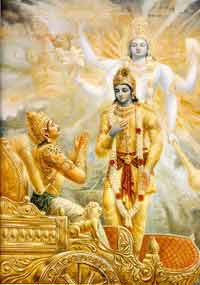
1. Brahman. The first of the Hindu tri-fecta, Brahman is what is called the creator. He is the God whose caste name is the highest on the planet. The Brahmans, or the priests, are top notch. Brahman is most revered in the town of Pushkar, in which Lisa and I later visit. The reason being is that he planned on marrying his long time Goddess girlfriend - Savarti. On their wedding day, Savarti was delayed in getting dressed, and the Indian wedding ceremony had started. Brahman needed a fill-in bride to complete this one portion of the ceremony so she calles this other woman - Gaytri - to take her place. Needless to say, Savarti is upset. She throws a curse on Brahman that he will go in decline as a God and will only be worshiped here in Pushkar. Years later, this turns to be true. While Brahman is still revered as the original, his stock has fallen recently due to Gods #2 and 3, to be explained forthcomming.

2. Vishnu, the preserver. He gets much respect around India due to the fact he was a wartime hero back in the day. He has supposedly been incarnated many times. The most famous ones being Krishna - the cowherder God explained below, and Buddha - everyone's favorite yoga idol.

3. Shiva. The destroyer and recreator. I guess you can call him the God that takes care of the Recycling. He takes old souls that has passed on and creates new ones. This God is everywhere. There are multiple temples in every city in India and Nepal. He has many different moods. When he gets angry, he turns into Bhirbab - this 'incredible hulk' like God that goes ballistic on anything crossing his path. All in all, Shiva is very much respected. He also rides on a neat-looking Bull named Nandi.

4. Pavarti. Shiva's consort - or wife. She is probably the sexiest Goddess of them all, so by all means, let's put her in the Top 5.
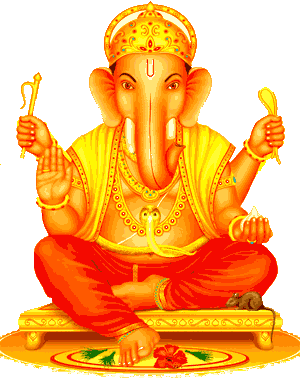
5. Ganesh. The elephant God. The Good luck god. Ganesh is also seen as a God of Knowledge. He was the Son of Shiva and Pavarti. Unfortunately, he had some hard times before achieving God Status, as Shiva the Dad was mad one day. Shiva is looking for his wife, Pavarti and sees her holding Ganesh in a loving fashion. For some reason, Shiva thought that Ganesh was making the moves on his mother and had his head cut off. Realizing what he's done, Shiva is torn to tears. The other Gods tell him that to redeem himself, he should take the first head he finds and put it back on Ganesh. After looking in the forest, all Shiva finds is an elephant. Sure enough, Shiva whacks the elephant's head and brings it back home for Ganesh. From here on out Ganesh becomes the elephant God. Elephants are celebrated throughout India - as Jaipur city elephant rides are as commonplace as rush hour traffic. Ganesh can now be found in gift shops, restaurants, and street vendors statewide.

6. Krishna. Everybody's favorite incarnation of Vishnu. He gets much heroic respect for his role in what Hindus call the Baghwad Gita. The story goes as follows.
Arjuna, an Indian general going back many centuries, is trying to win back the rightful ruling of his kingdom. He and his brothers are more than willing to fire out the Bows and arrows, but there's a catch. The people that they are fighting against are actually their jealous cousins, who also want to run the place. Arjuna starts to tear up when he realizes that he may have to kill some family members. That's when our superhero Krishna shows up as an armyman. Krishna tells Arjuna to get a grip. His overall message is, "Sometimes you just have to do your job, even though it's tough, because it's the right thing to do.'
Krishna was supposedly was also a cowboy as well as a part-time musician who wooed the ladies. All I have to say is that Elvis Presley has nothing on this guy, or God.

7. Hanuman, the monkey god. Another crowd pleaser. He is a hero of the famous story called the Ramayana. There's a whole story to this, but I'll try to summarize. There is this other King named Dasaratha who had this jealous wife named Kaikeyi. Kaikeyi is a younger wife, as Dasaratha has many wives. Kaikeyi wants her own son to become king. The problem is that her son is not the oldest one. The oldest son of Dasaratha's in named Rama. Kaikeyi gets all bent out of shape that her son won't be picked, and sends Rama into exile after the king Dasharatha's death. Years later, Rama gets some backup from this monkey god named Hanuman and reclaims the throne.

8. Gangaur. This Goddess is worshiped because she brings good luck. Recognized by her pink dress, Gangaur wishes them a safe return from battle. For women, they fling the pink flowers - signifying Gangaur - into a lake and pray for a good husband. This strategy may work as well as online dating.

9. Durga - the Goddess of destruction. While it sounds bad at first, Hindus believe she really destroys evil and is the true mother love of the universe. Personified as Lakshmi, the Goddess of Wealth, and Saraswati - the Goddess of Knowledge and Learning during the Hindu Diwali festival, Durga is like an old fashioned Mother Knows Best character. She is a consort of Shiva and holds great respect for the Hindu faith. That's why she makes the travelling sherman Hindu top 10.

10. The Holy Cow - the Kandenu God. They're not just for milking anymore. Cows are prevalent throughout all Hindu stories and traditions. Our friend, Krishna, was a cow herder. Our other friend, Brahma, created cows when creating priests. The Cow dung and cow urine are used in many Hindu ceremonies - including weddings - in which the people purify their houses. The horns on the cow represent the Gods. The face represents the sun and the moon. Their shoulders represent fire and their legs are the Himalayas. One can see cows o'plenty in almost every Indian city. Just don't ask for medium rare.
A disclaimer to anyone who may be reading this: The comments of the writer are not meant to be, nor are they meant to be used as fact in any way whatsoever. There are many Gods in the Hindu religion, and all of them have their place. These are simply some of my favorites.
Whether you are a religious zealot from the deep hills, or a cappucino agnostic living in a city, you cannot ignore this topic of God and religion when you are in India. Every bus has the Title of "God's Carrier" above the windshield. "God is great" can be seen on bumper stickers everywhere. What's great about Hinduism is that it's more of a buffet religion. You take what you like, you pass on what you don't like, and have as much as you want. Just make sure that you finish what you take, and use a clean plate each time when passing through the line.
-Travelling Sherman
Saturday, December 09, 2006
Tigers, Textiles and Bollywood
"Tigers and Owls and Deers, Oh My"
11/25
It is Day 3 in our India program with Mr. Singh, are hearladed driver. We are driving to Ranthembore National Park. It is the home of the Tigers, as Indira Ghandi started Project Tiger years ago to prevent them from extinction. Today has been a long drive at approximately 8 hours. I idle the time away looking out into the wilderness. The chaotic touts of Agra have been replaced by low lying brush and a big red ball of sunset. We go to sleep early tonight, as we are informed by Azra, the safari manager, that our wakeup call is roughly 5:30 A.M.
11/26
We enter the jeep and are two of six people. We meet a Spanish couple, whose names escape me at the moment along with a Swedish coule - Johanna and Rangnard. As we reach the park entrance, we are greeted by our friends barraging the jeep asking if we need things such as earmuffs, wool caps, gloves, and the like. I'm so glad my friends get up so early to harrass me. I'm also glad that my seat is towards the middle of the jeep, so the others become the line of first defense.
We venture on into the park. The driver and the guide parade us around promising us to see tigers. To be honest, my head is hurting so much that I could really care less about a tiger. It's a beautiful park at roughly 200 square miles. Why wake up the tiger? He's probably having a good nap. I turn my eyes to the sky as the 'guide' shows us various huge sitings of deer and owls. I could have driven 10 miles from my hometown for this jeep tour.
The hours pass and the group is almost about to give up. No tigers. The huge jeep/bus in front of us is making more noise than a samosa street stand in Delhi. All of the sudden, we hear what is referred to as the 'monkey call'. The monkeys in the trees warn the deer that a tiger is coming. Sure enough, the monkey is right. A beautiful Bengal tiger parades himself through the forest. We take some pictures and think we are through. No problem, the guide says, let's drive closer to the tiger. Johnanna, the Swedish girl, is losing her cookies. No problem, the guide says. Who is to argue at this point, as I am sure all of the necessary precautions have been taken for our safety.
We get to about 10 feet from the tiger and the tiger crosses our path. The tiger ignores us like we were yesterday's news and continues to the other side of the forest. It is amazing. We take some more pictures. Soon enough we are on our way back to the hotel. We have seen the fabled tiger. I just hope that the world can see more of them over the next 100 years.
-----------------------------------------
11/26 -11/27
"Jaipur"
Mr. Singh, our driver plays 2 cassette tapes front to back constantly. He plays his Sikh relighous songs. They actually are quite good as they have their share of tablas and accordians. The top song (translated into english) is called "Call to God". It is sung by a Sikh Priest in E flat minor. Mr. Singh promises to make a mix tape for me before he leaves us. I think he has a crush on me.
We reach Jaipur a few hours later. Jaipur is known as the pink city, as its old city lined with off-pink colors. Mr. Singh tells us that Pink is the color of hospitality and that this is how its color was created.
Jaipur is the completion of India's golden triangle, as Delhi and Agra make the other 2 corners. Started by Swai Jai Singh in the 18th century, Jaipur became the Capital of the Rajput colony - which later formed to become the state of Rajasthan. Jai Singh was the Mahanajra (or king) of this dynasty for many years, and wanted to make a home that was safe and had some access to clean water. The city was made as a grid like system according to Hindu Texts. Its is one of the few cities in India where you may not actually get lost if given a proper map.
Jaipur is also home to some of the nicest textiles in India. They use semiprecious stones with silk to make beautiful wall hangings, shawls, saris and the like. Three hours and a few hundred dollars later, Lisa and I buy enough cloth to cover the walls of a small studio. Don't worry, that's not the current plan - I hope.
Mr. Singh gives us the proper city tour. We enter the Pink gates to the City Palace, and check out the textile and arsenal museums. We see the assortment of knifes and guns. I find out that these guys were the first to come up with pajamas. Millions of small children with underoos are eternally grateful.
We see the Janthar Mantar - King Jah Sing's Astronomy museum. There are assortments of sun dials, rising sign dials and every dial known to man. The guide gives a good job as he tells us how to compute the time using the sun, the sign of zodiac, and the angle of this sign. This guy definately would be the student you would use to correct tests and quizzes if you were the teacher.
There are plenty of other forts and sights we see. A pink blur seems to cross my mind as I take it all in. We retire back at the hotel in the afternoon. We get suckered in to see what is called a "Bollywood" movie. Supposedly these films are the highest money grossing films in the world. Read on to find out the review. Otherwise, you can close this book or web browser and relax for a while.
-------------------
"The Bollywood Cinema at Raj Mandir, Jaipur, India"
The name of this movie is called "Vivia" or in english "From engagement to wedding". How do those Hindi-speaking folk pack so much into one word?
Start of Plot: Skip if not interested
11/25
It is Day 3 in our India program with Mr. Singh, are hearladed driver. We are driving to Ranthembore National Park. It is the home of the Tigers, as Indira Ghandi started Project Tiger years ago to prevent them from extinction. Today has been a long drive at approximately 8 hours. I idle the time away looking out into the wilderness. The chaotic touts of Agra have been replaced by low lying brush and a big red ball of sunset. We go to sleep early tonight, as we are informed by Azra, the safari manager, that our wakeup call is roughly 5:30 A.M.
11/26
We enter the jeep and are two of six people. We meet a Spanish couple, whose names escape me at the moment along with a Swedish coule - Johanna and Rangnard. As we reach the park entrance, we are greeted by our friends barraging the jeep asking if we need things such as earmuffs, wool caps, gloves, and the like. I'm so glad my friends get up so early to harrass me. I'm also glad that my seat is towards the middle of the jeep, so the others become the line of first defense.
We venture on into the park. The driver and the guide parade us around promising us to see tigers. To be honest, my head is hurting so much that I could really care less about a tiger. It's a beautiful park at roughly 200 square miles. Why wake up the tiger? He's probably having a good nap. I turn my eyes to the sky as the 'guide' shows us various huge sitings of deer and owls. I could have driven 10 miles from my hometown for this jeep tour.
The hours pass and the group is almost about to give up. No tigers. The huge jeep/bus in front of us is making more noise than a samosa street stand in Delhi. All of the sudden, we hear what is referred to as the 'monkey call'. The monkeys in the trees warn the deer that a tiger is coming. Sure enough, the monkey is right. A beautiful Bengal tiger parades himself through the forest. We take some pictures and think we are through. No problem, the guide says, let's drive closer to the tiger. Johnanna, the Swedish girl, is losing her cookies. No problem, the guide says. Who is to argue at this point, as I am sure all of the necessary precautions have been taken for our safety.
We get to about 10 feet from the tiger and the tiger crosses our path. The tiger ignores us like we were yesterday's news and continues to the other side of the forest. It is amazing. We take some more pictures. Soon enough we are on our way back to the hotel. We have seen the fabled tiger. I just hope that the world can see more of them over the next 100 years.
-----------------------------------------
11/26 -11/27
"Jaipur"
Mr. Singh, our driver plays 2 cassette tapes front to back constantly. He plays his Sikh relighous songs. They actually are quite good as they have their share of tablas and accordians. The top song (translated into english) is called "Call to God". It is sung by a Sikh Priest in E flat minor. Mr. Singh promises to make a mix tape for me before he leaves us. I think he has a crush on me.
We reach Jaipur a few hours later. Jaipur is known as the pink city, as its old city lined with off-pink colors. Mr. Singh tells us that Pink is the color of hospitality and that this is how its color was created.
Jaipur is the completion of India's golden triangle, as Delhi and Agra make the other 2 corners. Started by Swai Jai Singh in the 18th century, Jaipur became the Capital of the Rajput colony - which later formed to become the state of Rajasthan. Jai Singh was the Mahanajra (or king) of this dynasty for many years, and wanted to make a home that was safe and had some access to clean water. The city was made as a grid like system according to Hindu Texts. Its is one of the few cities in India where you may not actually get lost if given a proper map.
Jaipur is also home to some of the nicest textiles in India. They use semiprecious stones with silk to make beautiful wall hangings, shawls, saris and the like. Three hours and a few hundred dollars later, Lisa and I buy enough cloth to cover the walls of a small studio. Don't worry, that's not the current plan - I hope.
Mr. Singh gives us the proper city tour. We enter the Pink gates to the City Palace, and check out the textile and arsenal museums. We see the assortment of knifes and guns. I find out that these guys were the first to come up with pajamas. Millions of small children with underoos are eternally grateful.
We see the Janthar Mantar - King Jah Sing's Astronomy museum. There are assortments of sun dials, rising sign dials and every dial known to man. The guide gives a good job as he tells us how to compute the time using the sun, the sign of zodiac, and the angle of this sign. This guy definately would be the student you would use to correct tests and quizzes if you were the teacher.
There are plenty of other forts and sights we see. A pink blur seems to cross my mind as I take it all in. We retire back at the hotel in the afternoon. We get suckered in to see what is called a "Bollywood" movie. Supposedly these films are the highest money grossing films in the world. Read on to find out the review. Otherwise, you can close this book or web browser and relax for a while.
-------------------
"The Bollywood Cinema at Raj Mandir, Jaipur, India"
The name of this movie is called "Vivia" or in english "From engagement to wedding". How do those Hindi-speaking folk pack so much into one word?
Start of Plot: Skip if not interested
- So this family has one daughter and have adopted 1 niece. The adopt the nicece since the dad's brother and wife were in an accident.
- The niece is considered the 'eldest daughter' by the dad.
- The niece gives him his shawl every morning. They painstaikingly show this about 12 times. We get the point that the dad really loves this daughter.
- This father has a friend who knows a family with a son that is ready to wed. The father gives this friend a picture of a daughter. The groom's family is excited that their rich son is leaving the house.
- The mom resents the dad and niece since Dad spends way too much time with the niece instead of his real daughter. The mom gets all bent out of shape and decides she does not want to participate in the marriage.
- Right before the wedding, there is a fire in the bridal party's house. The niece goes back into the house to rescue the younger sister (or real daughter's) life. The bride receives internal burns in the process.
- There is a big dramatic scene about if the bride will be okay. During this scene, the mom comes around and accepts this niece as her daughter.
- The bride is okay. The husband comes to the hospital. They have money so they fly in this rich guy to fix her up. Everyone is happy. The audience is applauding for the 30th time during the movie.
End of Plot
Going to see an Indian movie is an experience I will never forget. The lines are long and the people are pushy, which is quite normal by Indian standards. As the movie starts, people have no problem coming in bit by bit for the next 30 minutes making as much noise as possible. Seven to Nine cell phones can ring at any time. In fact, our driver, in the midst of translating every 10 seconds (there are no subititles) picks up his ringing cell phone and has a 'quiet' conversation. I don't mind, as I enjoy this more than the movie itself.
The movie contains cheesy dream sequences and obvious music cues. Musical outbreaks happen through the movie. Bad lip syncing is a must. It is fun for the entire family. In the end, how can I complain. This is India after all. Everything is about drama. Even finding your seat is dramatic as yells across the theatre are commonplace. I'm glad that I've had this experience at the Bollywood Cinema. I just don't think there's room on my Netflix queue for any more of them.
Travelling Sherman
Friday, December 01, 2006
Agra, India
11/24
We see our driver, Mr. Singh, come up to the hotel in his tweed coat and black turban. He is happy to see us again, as we are of him. We step into the White dolphin car - our mode of transport for the next 2 weeks. He pulls open the passanger door as Lisa and I step inside.
Mr. Singh lights up two matchsticks of insense and has his morning prayer tapes playing in the background. I feel like I have just entered some mobile tantric room as his car is a shrine of peace. The white and pink flowers hang from the Dashboard. Next to it is his creed of how he is to protect and serve all visitors to his Nation of India. "It is my duty", he later tells us, "to make sure you are having good time in this program."
The 'program' for the day, as Mr. Singh calls it, is to drive to Agra. Agra is home of the famed Taj Mahal as well as many other fabled buildings. The drive is roughly six hours today. Mr. Singh is a fan of banannas as he stops by the fruit stand to order two bunches for the next few days. We take some bananas and store them in the back seat of the car. "2 bananas, 3 banans, no problem!" Our Sikh driver was definitely a monkey in his previous life.
Driving in India is a symphony of chaos. As every rule breaks Western intuition. They drive on the left side of the road and they use their horn every two seconds. In fact, it becomes way too common to see the sign "Please Blow Horn" on the back of a truck. It is way too common for cars to pass each other on to oncomming traffic. I close my eyes every 10 seconds for fear of another head on collision. Mr. Singh looks at me befuddled. "We drive, left, right, fast, slow, no problem!" We are told there are very few accidents in the major cities, and only very few accidents on the freeway. I tell Mr. Singh to just keep his eyes on the road.
------------------
Today's first stop on the 'program' is the Agra Fort. There is a fairly long story, but I will try to limit it to a paragraph. This fort was the home of Shah Jahn - a Moghul emperor - grandson of the first Moghul emperor Akbar. The Moghuls were the Muslim tribes that occupied India for over six centuries. This Shah Jahn was quite the ladies man at a herum of over 5000 wives. S. Jahn's son, for either reasons of herum jealousy or just plain out power hungry, imprisoned his father later in life within the Agra fort. For the son had begun to assume power over the years. At any rate, the story goes that the last few years of Shah Jahn's life was spent in the Agra fort looking at the Taj Mahal from the bedroom. To me, that's not prison, that's a 4 star hotel with unlimited room service.
--------------------
11/25
Aap kay say hay? What's going on? Mr. Singh has us up at 6:15 today. We get dropped off roughly one mile away from the Taj Mahal. The sun has not come up yet, but the tourists are coming. We walk the rest since the Indian government has banned all vehicles within 1 mile due to pollution.
The Taj Mahal is considered the 8th wonder of the world. This Shah Jahn character mentioned above really liked Marble. He liked it so much that he instructs 20,000 of his closest friends to retrieve marble from Rajasthan, India over a 20 year period in order to build him a building. As I mentioned above, this guy had 5000 wives. He had a favorite wife, whose name I forget, but she must have been something. For he decided to start building this Taj Mahal in her honor when she died. Artesans come into the mix and bring in semi-precious stones, and then etch these stones in the marble. Each octagonal shaped marble piece took 20 days. One crack of the stone and they had to start over again. At any rate, S. Jahn's wife is buried here in the Taj Mahal. And after S. Jahn goes, he gets buried right next to it. All I have to say is that the estate tax accountants must have had a field day when he died.
--------------
The reason we visit the Taj Mahal at sunrise is that sun and light affect this building tremendously. Being built of 100% hardened Indian marble, it is translucent in nature. When the sun or the moon or the stars hit the building, strange things happen to it. For example, when Lisa and I get there, the Taj Mahal becomes a soft, gray color. By midday, it becomes a pearly white color. People spend all day at the Taj Mahal just checking out the changing colors from the different lighting. It is a photographers dream come true. For me, I just like sitting down on the bench and getting away from the harrasing guides whom are not allowed inside.
------------
We stop on our way out of Agra at Fatehpur Sikiri, the old abandoned palace about 40 kilometers from Agra. It was the original capital of Akbar's reign, but was abandoned due to a low water supply. And given the 110+ degrees farenheit of the Indian summers, I don't blame him. We walk through the sandstone and marble structures and take pictures of the place. A highlight is that there is a pavilion where they played human chess. I guess it's good to be the king.
More to come, talk to you then.
Travelling Sherman
We see our driver, Mr. Singh, come up to the hotel in his tweed coat and black turban. He is happy to see us again, as we are of him. We step into the White dolphin car - our mode of transport for the next 2 weeks. He pulls open the passanger door as Lisa and I step inside.
Mr. Singh lights up two matchsticks of insense and has his morning prayer tapes playing in the background. I feel like I have just entered some mobile tantric room as his car is a shrine of peace. The white and pink flowers hang from the Dashboard. Next to it is his creed of how he is to protect and serve all visitors to his Nation of India. "It is my duty", he later tells us, "to make sure you are having good time in this program."
The 'program' for the day, as Mr. Singh calls it, is to drive to Agra. Agra is home of the famed Taj Mahal as well as many other fabled buildings. The drive is roughly six hours today. Mr. Singh is a fan of banannas as he stops by the fruit stand to order two bunches for the next few days. We take some bananas and store them in the back seat of the car. "2 bananas, 3 banans, no problem!" Our Sikh driver was definitely a monkey in his previous life.
Driving in India is a symphony of chaos. As every rule breaks Western intuition. They drive on the left side of the road and they use their horn every two seconds. In fact, it becomes way too common to see the sign "Please Blow Horn" on the back of a truck. It is way too common for cars to pass each other on to oncomming traffic. I close my eyes every 10 seconds for fear of another head on collision. Mr. Singh looks at me befuddled. "We drive, left, right, fast, slow, no problem!" We are told there are very few accidents in the major cities, and only very few accidents on the freeway. I tell Mr. Singh to just keep his eyes on the road.
------------------
Today's first stop on the 'program' is the Agra Fort. There is a fairly long story, but I will try to limit it to a paragraph. This fort was the home of Shah Jahn - a Moghul emperor - grandson of the first Moghul emperor Akbar. The Moghuls were the Muslim tribes that occupied India for over six centuries. This Shah Jahn was quite the ladies man at a herum of over 5000 wives. S. Jahn's son, for either reasons of herum jealousy or just plain out power hungry, imprisoned his father later in life within the Agra fort. For the son had begun to assume power over the years. At any rate, the story goes that the last few years of Shah Jahn's life was spent in the Agra fort looking at the Taj Mahal from the bedroom. To me, that's not prison, that's a 4 star hotel with unlimited room service.
--------------------
11/25
Aap kay say hay? What's going on? Mr. Singh has us up at 6:15 today. We get dropped off roughly one mile away from the Taj Mahal. The sun has not come up yet, but the tourists are coming. We walk the rest since the Indian government has banned all vehicles within 1 mile due to pollution.
The Taj Mahal is considered the 8th wonder of the world. This Shah Jahn character mentioned above really liked Marble. He liked it so much that he instructs 20,000 of his closest friends to retrieve marble from Rajasthan, India over a 20 year period in order to build him a building. As I mentioned above, this guy had 5000 wives. He had a favorite wife, whose name I forget, but she must have been something. For he decided to start building this Taj Mahal in her honor when she died. Artesans come into the mix and bring in semi-precious stones, and then etch these stones in the marble. Each octagonal shaped marble piece took 20 days. One crack of the stone and they had to start over again. At any rate, S. Jahn's wife is buried here in the Taj Mahal. And after S. Jahn goes, he gets buried right next to it. All I have to say is that the estate tax accountants must have had a field day when he died.
--------------
The reason we visit the Taj Mahal at sunrise is that sun and light affect this building tremendously. Being built of 100% hardened Indian marble, it is translucent in nature. When the sun or the moon or the stars hit the building, strange things happen to it. For example, when Lisa and I get there, the Taj Mahal becomes a soft, gray color. By midday, it becomes a pearly white color. People spend all day at the Taj Mahal just checking out the changing colors from the different lighting. It is a photographers dream come true. For me, I just like sitting down on the bench and getting away from the harrasing guides whom are not allowed inside.
------------
We stop on our way out of Agra at Fatehpur Sikiri, the old abandoned palace about 40 kilometers from Agra. It was the original capital of Akbar's reign, but was abandoned due to a low water supply. And given the 110+ degrees farenheit of the Indian summers, I don't blame him. We walk through the sandstone and marble structures and take pictures of the place. A highlight is that there is a pavilion where they played human chess. I guess it's good to be the king.
More to come, talk to you then.
Travelling Sherman
Tuesday, November 28, 2006
Delhi, India - Part 2
We check out of the Ajanta hotel like bandits that morning. The DTTDC has instructed us that the Ajanta hotel is an assembalnce of small time crooks and are putting us in a good place today. We walk down 1/2 a block to where we will be meeting our driver. Our Driver's name we are told is Mr. Singh. Singh in English translates to Lion. So in other words, we are going into the Lion's Den.
A white, compact car with Dolphin borders pulls up five minutes later and we flock to it like it's our ticket to freedom. Mr. Singh steps out of the car. He is wearing a black turbon and carries a grizzly black beard. He reminds me of an Indian Santa Claus. Immediately he charms us as he whisks us away from the swarms of touts, rickshaws and beggars in the immediate area. As the door shuts, we are away. We leave the headaches behind us for the next few weeks.
Today's itinerary is a city tour of Delhi. Mr. Singh assures us that as his driver, we have nothing to worry about. He is going to take care of admission into any buildings and museums. He tells us in his heavy Punjab accent, "no problem".
Punjab is a state in India where many of the Sikhs of India live. Sikhism began in the 18th century as a means of protecting India from being overrun by the Islamic empire. Sikhism borrows from both Islam and Hinduism. The Sikhs believes in only one God, and they preach to this god using personal mediation. Sikhism was started by a Guru (expert) named Nanak. There were ten Gurus that followed. The last Guru basically stated that it is up to the people to continue this religion and pass it on to their respected families. One of the precepts of Sikhism is honesty to others. At this time, I'm really glad Mr. Singh is a Sikh. He can pray as much as he wants just as long as the trip gets better.
And the trip gets better - Immediately. It is amazing how easy it is to get from one monument to another monument to another museum in minutes in what usually would take an hour of combined haggling and worry. We visit New Delhi today. We see a Lakshmi temple. We see the Indira Ghandi Museum - a fascinating tribute to Ghandi's life. Ghandi was one of the most important Prime Ministers of India, as she started the India-UN food grain program and nationalized the banking system. She was a champion of Civil Rights, and like all leaders way ahead of their time die much too young. She was assasinated in 1984 at the tender age of 67.
We see the Qutab Minar - the Islamic victory tower. Bascially the Muslims destroyed a series of Hindu temples in the last great battle in the 12th century. Believing in recycling, they use the rubble of the old Hindu temples to create an immense 200 ft. tower. Those guys were ahead of their time.
We see the Lotus Temple - a strikingly beautiful temple that reminds me of the Sydney Opera house. It's a Bahaii temple based on the new Bahaii religion. This religion mixes the best in all of the major religions and creates its own. It has a whole bunch of precepts that state tolerance to all, world courts, just societies, and all of the other nonsensical unrealistic ideas. Still, it's a beautiful temple. I know that someone high up is laughing about the Bahaii temples all the way to the bank.
--------
After 4 days of intense frustration, today is finally a success. Having a driver allows you to see the charms of India. Lisa and I are leaving with Mr. Singh to Agra tomorrow - home of the Taj Mahal, the Agra fort, and troublesome scams. I'm sure I'll be telling you every painstaking detail here quite soon. Enjoy yourselves, as we will do the same.
Talk to you soon,
Travelling Sherman
A white, compact car with Dolphin borders pulls up five minutes later and we flock to it like it's our ticket to freedom. Mr. Singh steps out of the car. He is wearing a black turbon and carries a grizzly black beard. He reminds me of an Indian Santa Claus. Immediately he charms us as he whisks us away from the swarms of touts, rickshaws and beggars in the immediate area. As the door shuts, we are away. We leave the headaches behind us for the next few weeks.
Today's itinerary is a city tour of Delhi. Mr. Singh assures us that as his driver, we have nothing to worry about. He is going to take care of admission into any buildings and museums. He tells us in his heavy Punjab accent, "no problem".
Punjab is a state in India where many of the Sikhs of India live. Sikhism began in the 18th century as a means of protecting India from being overrun by the Islamic empire. Sikhism borrows from both Islam and Hinduism. The Sikhs believes in only one God, and they preach to this god using personal mediation. Sikhism was started by a Guru (expert) named Nanak. There were ten Gurus that followed. The last Guru basically stated that it is up to the people to continue this religion and pass it on to their respected families. One of the precepts of Sikhism is honesty to others. At this time, I'm really glad Mr. Singh is a Sikh. He can pray as much as he wants just as long as the trip gets better.
And the trip gets better - Immediately. It is amazing how easy it is to get from one monument to another monument to another museum in minutes in what usually would take an hour of combined haggling and worry. We visit New Delhi today. We see a Lakshmi temple. We see the Indira Ghandi Museum - a fascinating tribute to Ghandi's life. Ghandi was one of the most important Prime Ministers of India, as she started the India-UN food grain program and nationalized the banking system. She was a champion of Civil Rights, and like all leaders way ahead of their time die much too young. She was assasinated in 1984 at the tender age of 67.
We see the Qutab Minar - the Islamic victory tower. Bascially the Muslims destroyed a series of Hindu temples in the last great battle in the 12th century. Believing in recycling, they use the rubble of the old Hindu temples to create an immense 200 ft. tower. Those guys were ahead of their time.
We see the Lotus Temple - a strikingly beautiful temple that reminds me of the Sydney Opera house. It's a Bahaii temple based on the new Bahaii religion. This religion mixes the best in all of the major religions and creates its own. It has a whole bunch of precepts that state tolerance to all, world courts, just societies, and all of the other nonsensical unrealistic ideas. Still, it's a beautiful temple. I know that someone high up is laughing about the Bahaii temples all the way to the bank.
--------
After 4 days of intense frustration, today is finally a success. Having a driver allows you to see the charms of India. Lisa and I are leaving with Mr. Singh to Agra tomorrow - home of the Taj Mahal, the Agra fort, and troublesome scams. I'm sure I'll be telling you every painstaking detail here quite soon. Enjoy yourselves, as we will do the same.
Talk to you soon,
Travelling Sherman
Delhi, India - Part 1
November 22,
I wake up from the sleeper train as people all around me have woken up. There is some commotion on the train, as tourists are throwing their rucksacks upon their backs. After a surprisingly good night's sleep on the train, we have arrived in Delhi. We exit the train station and walk down the steps to find ourselves planted in this Nation's Capital.
You begin to feel the throng of over 10 million people when entering in Delhi. Samosa stands, rickshaws and 'tourist' agencies fill the streets. As many of you may know, Delhi is broken off into two main sections: Old Delhi and New Delhi. The old city is the original Delhi township, that may have been settled over 2500 years ago. After originally being one of the primary towns of worship for the Hindu religion, it was overtaken by the Muslims in the 12th century.
The Muslims ruled Delhi for almost 6 centuries until the Brittish empire rolled into town around the early 19th century. The Brittish moved the capital of India to Delhi in the early 20th century and decked out what is now New Delhi. New roads, stores and restaurants were installed. Today, you can still see evidence of these two distinct parts of town - Old Delhi and New Delhi.
-----------
While the food and mystique of India cannot be beat, India is not by any means a place to receive consistent information. Nothing is what it seems. For example, you can forget about asking for directions in India. A friend that we met told us that she asked six different people where a certain establishment was located and received six different answers. In India, the response of "I don't know" is never uttered. In fact, asking for directions can easily get you into a wild goose chase, where you are leashed around the city for 20 minutes and are emphatically shown your location when you get there. In other words, if you don't have your act together, don't even bother setting foot outside your hotel or guesthouse. Just go back to bed and try again the following day.
We are staying at the Ajanta hotel nearby the train station. And at first glance, it's a fine hotel. Lisa and I were thuroughly drained from Varanassi that we needed a nice place to stay. At $30 per night, the Ajanta hotel seems like a 4-star hotel compared to our previous amenities.
We then begin to read between the lines. If you want to get a taxi, they may say to you: "Why do you need a taxi? Just step into our travel office." You may even get impressed the first time you see "Gov't approved" outside the window. You then realize that half of the travel agents have the same sign posted out in front of their offices. My head begins to spin again. Nothing is what it seems.
------
We finally look back into our India Rough Guide and find the DTTDC - the Delhi Tourism and Transport Development coorporation. This is considered the official government agency. I ask the rickshaw to take me here and he obediently follows. He insists on staying parked right outside so that he can take me back. After a weak showing of resistance, I give in. I let the rickshaw driver stay as I walk inside the office.
I meet a gentleman named Naz. Right away, he seems much more subdued than the scores of other agents and touts I have met in my travels. I tell him that my girlfriend and I wish to take a Delhi tour tomorrow. Naz gives me the information and tells me to come back with Lisa. For the first time, here is someone that was not desperately trying to squeeze out every rupee from my wallet.
I take the rickshaw back and it's a harrowing experience. The driver takes me to an emporium (an Indian craft store) despite my sharp disagreements. I refuse to get out of the rickshaw. The driver caves in and takes me back to the hotel. He makes my skin crawl. As I get out of the rickshaw I try to go into the internet cafe next door. The driver follows me in trying to 'help' me. If he was back in the USA, he would be a Friday evening miniseries. In India, he is business as usual.
---------
I meet Lisa and go over what Naz from the DTTDC told me. She agrees that it sounds good, as we agree to go back right away. We decide to walk this time. The same rickshaw driver follows us for a block and then gives up. We get to the area of town where I think the DTTDC is located, and then we get lost. Located in Connaught Place, you have to navigate through a series of concentric semicircles. We try asking for directions, and it's a disaster for the reasons explained above. After an hour, we retrace our steps and we miraculously find the place. We are exhausted yet relieved, as Naz sees us and greets us at the door.
----------
Naz has us take a seat, as a few groups of westerners are working out their travel plans as well. By the looks of their faces, it seems that they had some of the similar experiences as us. I gulp down two cups of chai (Indian tea with milk). We finally get a chance to speak with Naz.
Paranoia has taken over both Lisa and me. How do we know these guys are not imposters. Nothing is what it seems. India now seems to me as one big Twilight Zone episode that never ends. Naz assures us that all is okay. Between his experience with westerners and his experience in the industry, both Lisa and I begin to relax. Lisa is on her 3rd cigarette this afternoon, and I don't mind one bit.
After realizing that the bus tour is full tomorrow, Naz convinces us to take a driver and make it a bigger tour. We decide to do it. It may seem posh to have a driver every day, but in India it makes all the sense of the world. No rickshaws, no haggling, no headache. Let me know where I sign the check.
So Lisa and I sign up for a 15 day tour that starts with a 1 day city tour of Delhi, a few day stint in Agra, followed by almost a 2 week stint in Rajasthan. We are so relieved. After taking dinner closeby, the DTTDC even has a driver drop us off at our hotel. We are instructed to be packed and ready at 8:30 in the morning to meet Mr. Singh - our driver for the next 15 days.
I wake up from the sleeper train as people all around me have woken up. There is some commotion on the train, as tourists are throwing their rucksacks upon their backs. After a surprisingly good night's sleep on the train, we have arrived in Delhi. We exit the train station and walk down the steps to find ourselves planted in this Nation's Capital.
You begin to feel the throng of over 10 million people when entering in Delhi. Samosa stands, rickshaws and 'tourist' agencies fill the streets. As many of you may know, Delhi is broken off into two main sections: Old Delhi and New Delhi. The old city is the original Delhi township, that may have been settled over 2500 years ago. After originally being one of the primary towns of worship for the Hindu religion, it was overtaken by the Muslims in the 12th century.
The Muslims ruled Delhi for almost 6 centuries until the Brittish empire rolled into town around the early 19th century. The Brittish moved the capital of India to Delhi in the early 20th century and decked out what is now New Delhi. New roads, stores and restaurants were installed. Today, you can still see evidence of these two distinct parts of town - Old Delhi and New Delhi.
-----------
While the food and mystique of India cannot be beat, India is not by any means a place to receive consistent information. Nothing is what it seems. For example, you can forget about asking for directions in India. A friend that we met told us that she asked six different people where a certain establishment was located and received six different answers. In India, the response of "I don't know" is never uttered. In fact, asking for directions can easily get you into a wild goose chase, where you are leashed around the city for 20 minutes and are emphatically shown your location when you get there. In other words, if you don't have your act together, don't even bother setting foot outside your hotel or guesthouse. Just go back to bed and try again the following day.
We are staying at the Ajanta hotel nearby the train station. And at first glance, it's a fine hotel. Lisa and I were thuroughly drained from Varanassi that we needed a nice place to stay. At $30 per night, the Ajanta hotel seems like a 4-star hotel compared to our previous amenities.
We then begin to read between the lines. If you want to get a taxi, they may say to you: "Why do you need a taxi? Just step into our travel office." You may even get impressed the first time you see "Gov't approved" outside the window. You then realize that half of the travel agents have the same sign posted out in front of their offices. My head begins to spin again. Nothing is what it seems.
------
We finally look back into our India Rough Guide and find the DTTDC - the Delhi Tourism and Transport Development coorporation. This is considered the official government agency. I ask the rickshaw to take me here and he obediently follows. He insists on staying parked right outside so that he can take me back. After a weak showing of resistance, I give in. I let the rickshaw driver stay as I walk inside the office.
I meet a gentleman named Naz. Right away, he seems much more subdued than the scores of other agents and touts I have met in my travels. I tell him that my girlfriend and I wish to take a Delhi tour tomorrow. Naz gives me the information and tells me to come back with Lisa. For the first time, here is someone that was not desperately trying to squeeze out every rupee from my wallet.
I take the rickshaw back and it's a harrowing experience. The driver takes me to an emporium (an Indian craft store) despite my sharp disagreements. I refuse to get out of the rickshaw. The driver caves in and takes me back to the hotel. He makes my skin crawl. As I get out of the rickshaw I try to go into the internet cafe next door. The driver follows me in trying to 'help' me. If he was back in the USA, he would be a Friday evening miniseries. In India, he is business as usual.
---------
I meet Lisa and go over what Naz from the DTTDC told me. She agrees that it sounds good, as we agree to go back right away. We decide to walk this time. The same rickshaw driver follows us for a block and then gives up. We get to the area of town where I think the DTTDC is located, and then we get lost. Located in Connaught Place, you have to navigate through a series of concentric semicircles. We try asking for directions, and it's a disaster for the reasons explained above. After an hour, we retrace our steps and we miraculously find the place. We are exhausted yet relieved, as Naz sees us and greets us at the door.
----------
Naz has us take a seat, as a few groups of westerners are working out their travel plans as well. By the looks of their faces, it seems that they had some of the similar experiences as us. I gulp down two cups of chai (Indian tea with milk). We finally get a chance to speak with Naz.
Paranoia has taken over both Lisa and me. How do we know these guys are not imposters. Nothing is what it seems. India now seems to me as one big Twilight Zone episode that never ends. Naz assures us that all is okay. Between his experience with westerners and his experience in the industry, both Lisa and I begin to relax. Lisa is on her 3rd cigarette this afternoon, and I don't mind one bit.
After realizing that the bus tour is full tomorrow, Naz convinces us to take a driver and make it a bigger tour. We decide to do it. It may seem posh to have a driver every day, but in India it makes all the sense of the world. No rickshaws, no haggling, no headache. Let me know where I sign the check.
So Lisa and I sign up for a 15 day tour that starts with a 1 day city tour of Delhi, a few day stint in Agra, followed by almost a 2 week stint in Rajasthan. We are so relieved. After taking dinner closeby, the DTTDC even has a driver drop us off at our hotel. We are instructed to be packed and ready at 8:30 in the morning to meet Mr. Singh - our driver for the next 15 days.
Sunday, November 26, 2006
Varanasi, India
November 19,
I am sitting at the Ganga Fuji guest house with the various tourists from the UK, Australia and New Zeland. The boss tells us to have a seat. And for the first time here in Varanasi, my headache is beginning to subside.
Some people say that India is a constant headache. For the moment, I could not agree more. There are vehicles swiping at you from every direction. There is dust coming out from every angle. There are people coming at you with every trinket known to humankind. It begins to make sense why yoga was started in this country. It prevents people from the straight jacket. It also makes sense why Buddha became enlightened not far from this very spot. It furthermore makes sense how Buddha came up with his 4 noble truths: sorrow, the cause of sorrow, the end of sorrow, and the path leading to the End of Sorrow. My current theory is that the citizens of India need an escape from the chaos of its 1.1 billion people. They need to escape from the constant heckling of the Cycle rickshaws, Auto rickshaws, and bovine creatures. If anyone has found the path leading to the End of Sorrow, please send me an email straight away.
The Brahman (high class priest) has just stepped on the couch behind me and is murmuring some prayers in Hindi to Shiva - the God responsible for destroying and recreating things. The Brhaman looks into a red lighted box and reads his prayers similar to how an elementary school kid emphatically recites the Pledge of Allegiance. Within minutes, he is gone. Express prayer. You can leave the two hour sermon behind you. Now that is a religion looking into when I get back home.
---------
Varanassi is a love/hate relationship. It is India's olderst city - from the 6th century B.C. -- and to be quite honest, you can tell immediately when you get there. The old city is limited only to small motorbikes, pedestrians and cows. After one night in the plush outskirts of town in the Cantonment district, we dive into the old city like a 5 year old dives off the high dive for the first time. We take the auto-rickshaw as far as it goes, which is on the fringe of the city centre. For those not familiar with an auto-rickshaw, imagine attaching a lawn mower engine into an golf cart. You then fill the vehicle to 175% capacity, and charge exhorbatant ammounts to take people very small distances.
The driver lets us off the rickshaw as we walk on to the main Bazaar - rucksacks strapped in. It is like a scene out of the "Indiana Jones - Temple of Doom" movie. Shops and Bazaars outline an otherwise dusty road. There are no addresses - simply alleyways. The traffic is chaos. The rickshaws run rampantly down the roads with no sign of traffic laws in sight. The only thing that trumps their manner is the holy cow. Black cows, white cows, bony cows, gangly cows - it does not matter. The cow runs the road. That is the end of the story.
----
Varanasi is considered the holiest city in all of India. Its temples mark the epicenter of Hinduism, attracting thousands of pilgrims each year. It would make sense that the Ganges river - India's largest and holiest river - would flow right through Varanasi. The people of Varanasi hold the Ganges with high regards. They believe that the river has a healing and theraputic power. Hence, many spiritual rituals are performed here on the river Ganges.
One such ritual is what I will call "The Sendoff of the Dead". During the day, the townspeople decorate the recently deceased in a shiny foil. The deceased are then put on to stretchers and paraded through the old city. After a brief ceremony in one of the old Hindu Temples, they are taken down to a ghat - a tiered riverbank where the sendoff ceremony will take place later that evening.
There are many ghats in Varanasi. They are mainly separated by caste system. For example, someone in the priest caste would be sent off in a different ghat than someone in the warrior Caste. We go to the Manikarka Ghat that evening, where mainly members of the priest caste are sent off.
Huge fires have been created along the ghats. The dead will first be creamated in a ritualistic nightly ceremony before their remains are sent along the Ganges. We huddle as close as we can around the procedings, but we are warned that getting to close would provoke hostile behavior. To be quite honest, I can understand. I wouldn't want a bunch of strangers scribbling notes and taking pictures at my loved one's funeral. On the flip side, the local Varanasi onlookers have no problem bugging you constantly while you try and watch the "sacred" ceremony. They may try out their broken english and ask questions such as the following:
"Know Something?"
"Friend, where you from?"
You can even pay a few hundred rupees per person to take a boat ride along the Ganges and watch the whole event. I'm sorry, I think I will pass on this and save my money for Redskins tickets.
The only thing I have learned in India is that I make many friends without saying a word. "Hey friend, I can take you around the city". "Hey friend, Rickshaw". They are even so nice to you that even the most tactful of "no's" is responded by a greated persuasion tactic. For example, they are willing to follow you around for 30 minutes stalking after you and yell. "Friend! Friend! Guide!" What nice people. WIth friends like that, who needs enemies.
-------
After 2 days of getting harrased by our "friends" at the Ghats, we decide to take a trip outside the city. We visit Sarnath. Home of the Buddha enlightenment and the 4 noble truths. It is here that Buddha was born and preached his first ceremony. It is here that Buddha sat under the Bodi tree and became enlightened. On roughly 5 acres of land, the grassy complex provides a great refuge from outside the Old City of Varanassi. There is even a museum that is quiet. While my brain is full from the outside stresses of India, I quietly sit on the benches inside the museum for 20 minutes straight. It was the calmest 20 minutes I have had in days.
------
My goal is to not give this area such a hard time. Varanasi proves wonderful in many ways. Every meal we have had here is excellent. We eat South Indian flatbread (Dosas) with chickpeas. We have chana massala (chick peas and vegetables) and paneer palak (cheese and potatoes). Every meal is the equivalent of $3 US or less. We eat Dosas for snacks at 15 cents a piece. At lunch, they even realize to turn on the fan as the only white guy in the restaurant is sweating through his 2nd shirt of the day. Next time, I need not order the spiciest thing on the menu.
After a 3 days stay and a nice shave from the barber, Lisa and I realize it is time to leave. We have the Ganga Fuji guest house reserve a train. The Indian trains are quite good, being the 2nd largest train system in the entire world. Lisa and I get what is called AS-3 reservations. This means an air conditioned car with 6 twin folding beds (3 per side, vertically stacked). We meet some good people from France and Israel, and I eat the non-veg fried chicken and rice. Sleep awaits me. For tomorrow morning, we should arrive in Delhi, India - the Capital. If I've learned one thing in India thus far, it would be that nothing is what it seems, for better or worse.
Keep travelling, wherever you are.
Travelling Sherman
I am sitting at the Ganga Fuji guest house with the various tourists from the UK, Australia and New Zeland. The boss tells us to have a seat. And for the first time here in Varanasi, my headache is beginning to subside.
Some people say that India is a constant headache. For the moment, I could not agree more. There are vehicles swiping at you from every direction. There is dust coming out from every angle. There are people coming at you with every trinket known to humankind. It begins to make sense why yoga was started in this country. It prevents people from the straight jacket. It also makes sense why Buddha became enlightened not far from this very spot. It furthermore makes sense how Buddha came up with his 4 noble truths: sorrow, the cause of sorrow, the end of sorrow, and the path leading to the End of Sorrow. My current theory is that the citizens of India need an escape from the chaos of its 1.1 billion people. They need to escape from the constant heckling of the Cycle rickshaws, Auto rickshaws, and bovine creatures. If anyone has found the path leading to the End of Sorrow, please send me an email straight away.
The Brahman (high class priest) has just stepped on the couch behind me and is murmuring some prayers in Hindi to Shiva - the God responsible for destroying and recreating things. The Brhaman looks into a red lighted box and reads his prayers similar to how an elementary school kid emphatically recites the Pledge of Allegiance. Within minutes, he is gone. Express prayer. You can leave the two hour sermon behind you. Now that is a religion looking into when I get back home.
---------
Varanassi is a love/hate relationship. It is India's olderst city - from the 6th century B.C. -- and to be quite honest, you can tell immediately when you get there. The old city is limited only to small motorbikes, pedestrians and cows. After one night in the plush outskirts of town in the Cantonment district, we dive into the old city like a 5 year old dives off the high dive for the first time. We take the auto-rickshaw as far as it goes, which is on the fringe of the city centre. For those not familiar with an auto-rickshaw, imagine attaching a lawn mower engine into an golf cart. You then fill the vehicle to 175% capacity, and charge exhorbatant ammounts to take people very small distances.
The driver lets us off the rickshaw as we walk on to the main Bazaar - rucksacks strapped in. It is like a scene out of the "Indiana Jones - Temple of Doom" movie. Shops and Bazaars outline an otherwise dusty road. There are no addresses - simply alleyways. The traffic is chaos. The rickshaws run rampantly down the roads with no sign of traffic laws in sight. The only thing that trumps their manner is the holy cow. Black cows, white cows, bony cows, gangly cows - it does not matter. The cow runs the road. That is the end of the story.
----
Varanasi is considered the holiest city in all of India. Its temples mark the epicenter of Hinduism, attracting thousands of pilgrims each year. It would make sense that the Ganges river - India's largest and holiest river - would flow right through Varanasi. The people of Varanasi hold the Ganges with high regards. They believe that the river has a healing and theraputic power. Hence, many spiritual rituals are performed here on the river Ganges.
One such ritual is what I will call "The Sendoff of the Dead". During the day, the townspeople decorate the recently deceased in a shiny foil. The deceased are then put on to stretchers and paraded through the old city. After a brief ceremony in one of the old Hindu Temples, they are taken down to a ghat - a tiered riverbank where the sendoff ceremony will take place later that evening.
There are many ghats in Varanasi. They are mainly separated by caste system. For example, someone in the priest caste would be sent off in a different ghat than someone in the warrior Caste. We go to the Manikarka Ghat that evening, where mainly members of the priest caste are sent off.
Huge fires have been created along the ghats. The dead will first be creamated in a ritualistic nightly ceremony before their remains are sent along the Ganges. We huddle as close as we can around the procedings, but we are warned that getting to close would provoke hostile behavior. To be quite honest, I can understand. I wouldn't want a bunch of strangers scribbling notes and taking pictures at my loved one's funeral. On the flip side, the local Varanasi onlookers have no problem bugging you constantly while you try and watch the "sacred" ceremony. They may try out their broken english and ask questions such as the following:
"Know Something?"
"Friend, where you from?"
You can even pay a few hundred rupees per person to take a boat ride along the Ganges and watch the whole event. I'm sorry, I think I will pass on this and save my money for Redskins tickets.
The only thing I have learned in India is that I make many friends without saying a word. "Hey friend, I can take you around the city". "Hey friend, Rickshaw". They are even so nice to you that even the most tactful of "no's" is responded by a greated persuasion tactic. For example, they are willing to follow you around for 30 minutes stalking after you and yell. "Friend! Friend! Guide!" What nice people. WIth friends like that, who needs enemies.
-------
After 2 days of getting harrased by our "friends" at the Ghats, we decide to take a trip outside the city. We visit Sarnath. Home of the Buddha enlightenment and the 4 noble truths. It is here that Buddha was born and preached his first ceremony. It is here that Buddha sat under the Bodi tree and became enlightened. On roughly 5 acres of land, the grassy complex provides a great refuge from outside the Old City of Varanassi. There is even a museum that is quiet. While my brain is full from the outside stresses of India, I quietly sit on the benches inside the museum for 20 minutes straight. It was the calmest 20 minutes I have had in days.
------
My goal is to not give this area such a hard time. Varanasi proves wonderful in many ways. Every meal we have had here is excellent. We eat South Indian flatbread (Dosas) with chickpeas. We have chana massala (chick peas and vegetables) and paneer palak (cheese and potatoes). Every meal is the equivalent of $3 US or less. We eat Dosas for snacks at 15 cents a piece. At lunch, they even realize to turn on the fan as the only white guy in the restaurant is sweating through his 2nd shirt of the day. Next time, I need not order the spiciest thing on the menu.
After a 3 days stay and a nice shave from the barber, Lisa and I realize it is time to leave. We have the Ganga Fuji guest house reserve a train. The Indian trains are quite good, being the 2nd largest train system in the entire world. Lisa and I get what is called AS-3 reservations. This means an air conditioned car with 6 twin folding beds (3 per side, vertically stacked). We meet some good people from France and Israel, and I eat the non-veg fried chicken and rice. Sleep awaits me. For tomorrow morning, we should arrive in Delhi, India - the Capital. If I've learned one thing in India thus far, it would be that nothing is what it seems, for better or worse.
Keep travelling, wherever you are.
Travelling Sherman
Subscribe to:
Posts (Atom)
